
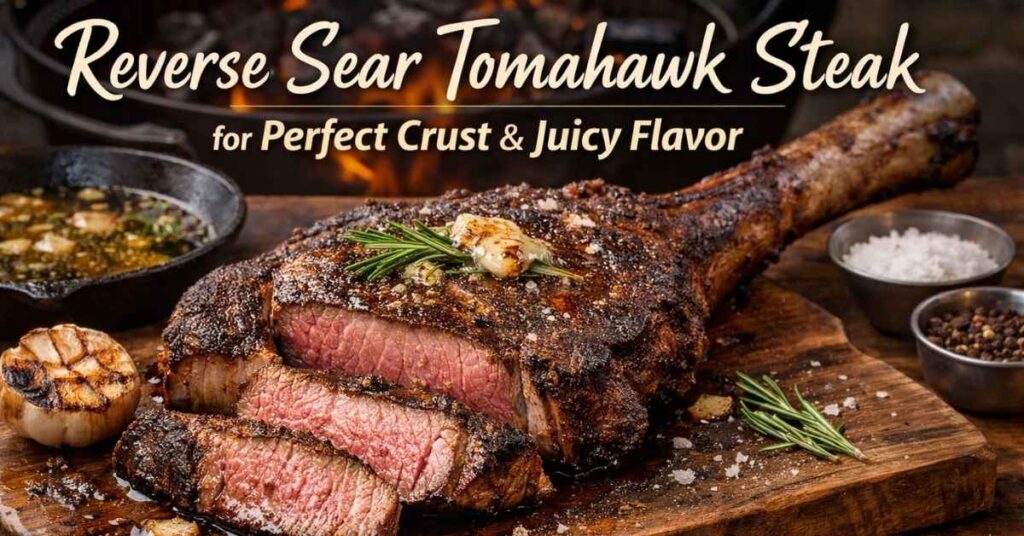
Reverse Sear Tomahawk Steak is widely considered the best way to cook a thick, bone-in steak if you want steakhouse-quality results at home. This method gives you even doneness from edge to edge, a deep, flavorful crust, and complete control over internal temperature—something traditional grilling often fails to deliver with a cut as large as a tomahawk steak.
Because a tomahawk steak is essentially a thick-cut, bone-in ribeye, it requires a cooking method that respects its size, structure, and fat content. Reverse searing does exactly that by slowly bringing the steak up to temperature before finishing it with an intense high-heat sear. The result is juicy, tender meat with a beautiful crust and no gray banding.
This guide walks you through everything you need to know from temperatures and timing to equipment, common mistakes, and professional tips so you can confidently cook the perfect reverse seared tomahawk steak every time.
What Is the Reverse Sear Method?
The reverse sear method flips the traditional steak-cooking process. Instead of searing first and finishing over lower heat, you cook the steak low and slow first, then sear it at the end.
The process follows a simple logic:
- Slowly cook the steak using indirect heat until it reaches the desired internal temperature.
- Finish with a high-heat sear to create a crisp, flavorful crust.
This approach allows for precise temperature control, making it especially effective for thick steaks like tomahawk steak, ribeye, and porterhouse.
Reverse Sear vs Traditional Searing
Traditional searing often causes:
- Uneven cooking
- Overcooked outer layers
- Under- or over-done centers
Reverse searing solves these problems by:
- Promoting even doneness
- Reducing moisture loss
- Preventing gray banding
- Maximizing the Maillard reaction during searing
Why Reverse Searing Is Perfect for a Tomahawk Steak
A tomahawk steak is not a standard cut. It is large, thick (often 2–3 inches), and bone-in, which means heat behaves differently compared to thinner steaks.
Reverse searing works best for tomahawk steak because:
- The thickness allows gradual heat penetration
- The bone retains heat, improving internal cooking
- The fat content renders slowly, enhancing flavor
- The final sear creates a crust without overcooking the interior
Unlike direct grilling, reverse searing gives you full control, ensuring the steak cooks evenly from edge to center.
What You Need to Reverse Sear a Tomahawk Steak
Ingredients
- 1 tomahawk steak (2–3 inches thick)
- Kosher salt
- Freshly ground black pepper
- High-smoke-point oil
- Optional: butter, garlic cloves, fresh thyme or rosemary
Tools & Equipment
- Meat thermometer (essential for accuracy)
- Cast iron skillet or grill grates
- Oven, grill, smoker, or pellet grill
- Tongs and a resting rack
A thermometer is non-negotiable. Guesswork is the fastest way to ruin a reverse sear tomahawk steak.
Best Temperature & Doneness Guide for Tomahawk Steak
Temperature control is where most cooks succeed or fail. Reverse searing relies on internal temperature, not time alone.
Low-Heat Cooking Temperature
| Cooking Method | Temperature |
| Oven | 225°F–250°F |
| Grill (Indirect Heat) | 225°F–250°F |
| Smoker / Pellet Grill | 225°F |
Lower temperatures produce better results and allow more margin for error.
Internal Temperature Chart (Before & After Sear)
| Doneness | Pull Temp | Final Temp |
| Rare | 110°F | 120–125°F |
| Medium-Rare | 115°F | 130–135°F |
| Medium | 120°F | 140–145°F |
Carryover cooking will raise the internal temperature by 5–10°F after searing and resting.
Step-by-Step Reverse Sear Tomahawk Steak (Foolproof Method)
Step 1: Dry Brine & Seasoning (Optional but Recommended)
Season the tomahawk steak generously with kosher salt at least 4 hours before cooking, or overnight if possible. This dry brining process enhances flavor and helps develop a better crust.
Before cooking, add black pepper and any optional seasoning.
Step 2: Slow Cook Using Indirect Heat
Place the steak on a wire rack or grill grate and cook using indirect heat. Insert a meat thermometer into the thickest part of the steak.
Cook until the internal temperature reaches your target pull temperature (usually 110–115°F for medium-rare).
Depending on thickness, this stage typically takes 45–75 minutes.
Step 3: Rest Before Searing (Often Skipped)
Remove the steak and let it rest for 10 minutes. This step stabilizes the internal temperature and reduces moisture loss during searing.
Many competitors skip this step—but it matters.
Step 4: High-Heat Sear for Perfect Crust
Heat a cast iron skillet or grill to 450–500°F. Add oil and sear the steak for 45–60 seconds per side, including the edges.
Optional butter basting with garlic and herbs enhances flavor and creates a steakhouse finish.
Step 5: Final Rest & Slicing
Let the steak rest for another 10 minutes. Slice against the grain and serve immediately.
Read more>>>How Long to Smoke Ribs: Exact Times, Temps & Tenderness Guide
Reverse Sear Tomahawk Steak by Cooking Method
Reverse Sear Tomahawk Steak in the Oven
This is the most controlled method and ideal for beginners. Use a low oven temperature and finish with a cast iron sear.
Reverse Sear Tomahawk Steak on the Grill
Use indirect heat first, then move the steak directly over hot coals or burners for searing.
Reverse Sear Tomahawk Steak on a Smoker
Smoking adds subtle flavor. Maintain steady temperatures and finish with a hot sear.
Reverse Sear Tomahawk Steak on a Pellet Grill (Traeger-Style)
Pellet grills excel at temperature control. Smoke low, then sear on a preheated cast iron or grill insert.
Common Mistakes to Avoid
- Skipping the thermometer
- Cooking at too high a low-heat temperature
- Searing before the steak reaches proper internal temp
- Cutting immediately after searing
- Over-seasoning before crust formation
Avoiding these mistakes alone can dramatically improve your results.
Pro Tips for Steakhouse-Quality Results
Professional chefs focus on science and technique, not shortcuts.
Key insights:
- The Maillard reaction requires dry heat and high temperatures
- Gray banding occurs from aggressive early heat
- Butter basting works best after crust formation
- Cast iron produces a more consistent crust than open flames
“Perfect steak isn’t about speed—it’s about control.”
FAQs
How long does it take to reverse sear a tomahawk steak?
Most tomahawk steaks take 60–90 minutes total, depending on thickness.
What temperature should I reverse sear a tomahawk steak?
Cook at 225°F–250°F and sear at 450–500°F.
Should I sear before or after cooking a tomahawk steak?
Always sear after slow cooking for best results.
Can you reverse sear a frozen tomahawk steak?
It’s not recommended. Thaw completely for even cooking.
Is reverse searing better than grilling directly?
For thick steaks, reverse searing delivers superior control and consistency.
Reverse Sear vs Other Tomahawk Steak Cooking Methods
| Method | Pros | Cons |
| Reverse Sear | Even doneness, great crust | Takes longer |
| Traditional Grill | Faster | Uneven cooking |
| Sous Vide | Precise | Less crust without sear |
Reverse searing strikes the best balance between flavor, texture, and control.
How to Store and Reheat Reverse-Seared Tomahawk Steak
Store leftovers tightly wrapped for up to 3 days. Reheat slowly at low temperature, then briefly sear to restore the crust without overcooking.
Why Reverse Searing Is the Best Way to Cook a Tomahawk Steak
Reverse searing transforms a massive cut into a controlled, predictable, and impressive dish. By cooking low and slow first, then finishing with a powerful sear, you get everything a tomahawk steak promises juiciness, tenderness, and bold flavor without the guesswork.
If you want restaurant-quality tomahawk steak at home, reverse searing isn’t just an option. It’s the method