
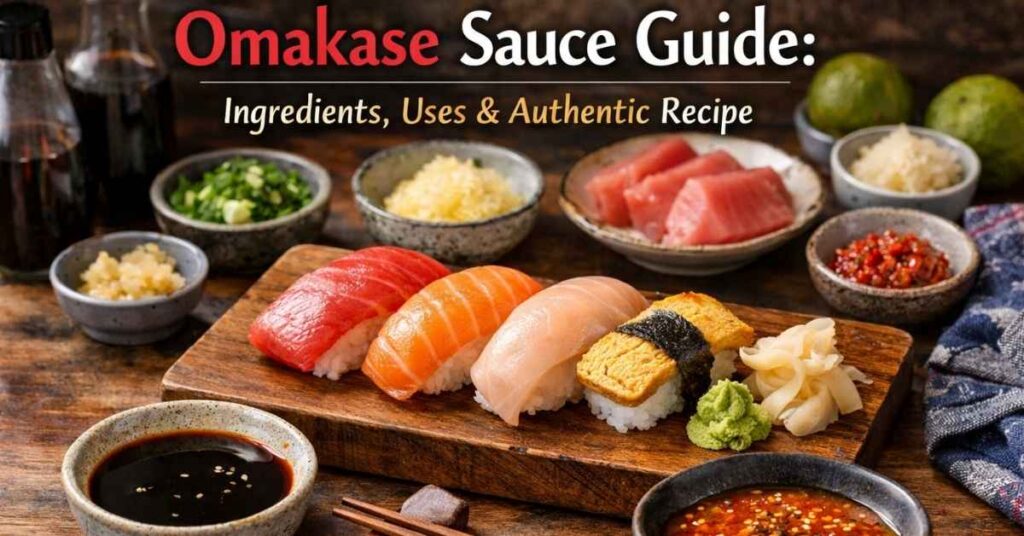
Omakase sauce is more than just another Japanese condiment. It represents balance, restraint, and the philosophy of trusting the chef. In Japanese dining, omakase means “I leave it up to you,” and that same idea carries into the sauce itself. Rather than overpowering food, this sauce exists to enhance natural flavors, especially in sushi, sashimi, and fine dining dishes.
What Does “Omakase” Mean in Japanese Cuisine?
In Japanese culture, omakase is not a recipe—it’s a mindset.
The word omakase translates to “I’ll leave it up to you.” When diners choose an omakase meal, they are placing complete trust in the chef’s expertise, ingredient selection, and seasoning decisions. This philosophy directly influences how omakase sauce is created and used.
Unlike Western sauces that are bold and dominant, Japanese fine dining sauces are subtle. The goal is harmony, not intensity.
“In omakase dining, the sauce should whisper, not shout.”
Why This Matters for Sauce
- Sauces are applied sparingly
- Seasoning is carefully balanced
- Ingredients change based on season and fish
- The sauce never overshadows the main ingredient
This philosophy explains why there is no single fixed this sauce recipe.
What Is Omakase Sauce?
Omakase sauce is a refined Japanese sauce designed to complement sushi, sashimi, grilled seafood, and sometimes meat. It is usually soy-based, often enhanced with mirin, sake, and dashi, and adjusted by chefs to suit specific dishes.
Is Omakase Sauce a Concept or a Recipe?
The answer is both.
- In restaurants, omakase sauce is a conceptual sauce, customized by the chef
- At home, it becomes a balanced Japanese sauce recipe inspired by that concept
What defines it is not a strict ingredient list, but its umami-forward, balanced flavor profile.
Flavor Profile of Omakase
Understanding the taste of this sauce helps you use it correctly.
What Does this Sauce Taste Like?
- Umami-rich, thanks to soy sauce and dashi
- Light sweetness from mirin
- Gentle acidity from rice vinegar
- Clean, savory finish
It is never overly sweet, never aggressively salty, and never spicy unless intentionally modified.
Why It Works So Well with Sushi
Raw fish and delicate seafood need restraint. This sauce enhances:
- Texture
- Aroma
- Natural sweetness of fish
- Mouthfeel without masking freshness
This is why many chefs brush the sauce onto nigiri instead of pouring it.
Traditional Ingredients Used in Omakase Sauce
Although recipes vary, most authentic omakase sauces rely on a familiar Japanese foundation.
Core Ingredients
| Ingredient | Purpose |
| Soy sauce or tamari | Salty umami base |
| Mirin | Mild sweetness |
| Sake | Aroma and depth |
| Dashi | Savory backbone |
| Rice vinegar | Balance and brightness |
Optional Enhancers
- Ginger for warmth
- Garlic for depth (used lightly)
- Sesame oil for aroma
- Yuzu for citrus freshness
- Honey or sugar for fine-tuning sweetness
Ingredient quality matters more than quantity. Chefs often use premium soy sauce or aged mirin to create complexity without heaviness.
How this Sauce Is Different from Other Japanese Sauces
This is a critical SEO and user-interest section that many competitors underdevelop.
Eel Sauce
- Eel sauce is thick, sweet, and caramelized
- Omakase sauce is lighter and less sweet
Teriyaki Sauce
- Teriyaki is bold and glossy
- Omakase is subtle and restrained
Ponzu
- Ponzu is citrus-forward
- Omakase focuses on umami
Soy Sauce
- Soy sauce alone lacks balance
- Omakase is layered and refined
In short: omakase is about harmony, not dominance.
How to Make Omakase Sauce at Home
Making omakase sauce at home is surprisingly approachable if you respect the philosophy behind it.
Key Principles Before You Start
- Don’t rush reduction
- Avoid overpowering flavors
- Taste frequently
- Adjust gradually
Common Mistakes to Avoid
- Over-sweetening
- Using low-quality soy sauce
- Cooking at high heat
- Adding too many ingredients
Restaurant-Style Omakase Sauce Recipe
This recipe is inspired by traditional Japanese techniques while remaining practical for home kitchens.
Ingredients
- ½ cup soy sauce or tamari
- ¼ cup mirin
- 2 tablespoons sake
- ½ cup dashi
- 1 teaspoon rice vinegar
Instructions
- Combine all ingredients in a saucepan
- Heat gently over low flame
- Simmer for 8–10 minutes
- Allow to cool before using
The sauce should be thin, glossy, and aromatic, not thick.
Variations of Omakase Sauce
This sauce adapts easily to dietary needs and personal taste.
Alcohol-Free Version
Replace mirin and sake with:
- Low-sugar mirin substitute
- Extra dashi and rice vinegar
Vegan and Vegetarian Options
- Use kombu-based dashi
- Avoid bonito flakes
Gluten-Free Omakase Sauce
- Use tamari instead of soy sauce
Citrus-Forward Variation
- Add yuzu juice or zest
Light Spicy Version
- A hint of wasabi or chili oil
How to Use Omakase Sauce
This sauce is versatile, but best used with intention.
Best Pairings
- Sushi and nigiri
- Sashimi
- Grilled fish
- Steak (brushed lightly)
- Rice bowls and noodles
Less is more. A small amount goes a long way.
Homemade vs Store-Bought Omakase Sauce
Homemade Sauce
Pros
- Customizable
- Fresh flavor
- Better control of ingredients
Cons
- Shorter shelf life
Store-Bought Sauce
Pros
- Convenient
- Consistent flavor
Cons
- Often sweeter
- Less nuanced
If buying bottled sauce, look for:
- Short ingredient lists
- No artificial thickeners
How Japanese Chefs Use This Sauce
Professional chefs treat sauce as a finishing element.
Chef Techniques
- Applied with a brush
- Matched to fish fat content
- Adjusted seasonally
This approach ensures the sauce supports the dish without leading it.
READ MORE>>>Croissant vs Crescent Roll: Key Differences Explained Simply
Storage, Shelf Life, and Safety
- Refrigerate homemade omakase sauce
- Use within 7–10 days
- Store in airtight glass container
Freezing is possible, but flavor may slightly degrade.
Nutritional Information & Health Considerations
This sauce is naturally low in fat but can be high in sodium.
Health Tips
- Use low-sodium soy sauce
- Control portions
- Balance with fresh foods
This aligns with Japanese dietary principles of moderation.
Common Mistakes When Using Omakase Sauce
- Pouring instead of brushing
- Pairing with heavily seasoned food
- Using it like teriyaki
Frequently Asked Questions
Is omakase sauce spicy?
No, traditionally it is not.
Is this sauce the same everywhere?
No. It varies by chef and restaurant.
Can it be used as a marinade?
Lightly, but it’s best as a finishing sauce.
Is this sauce gluten-free?
Only if made with tamari.
Can beginners make it at home?
Absolutely.
Final Thoughts: Why Omakase Sauce Is About Balance
Omakase sauce reflects the soul of Japanese cuisine—respect for ingredients, balance of flavor, and trust in simplicity. Whether you make it at home or experience it in a fine dining restaurant, understanding the philosophy behind the sauce transforms how you taste food.