
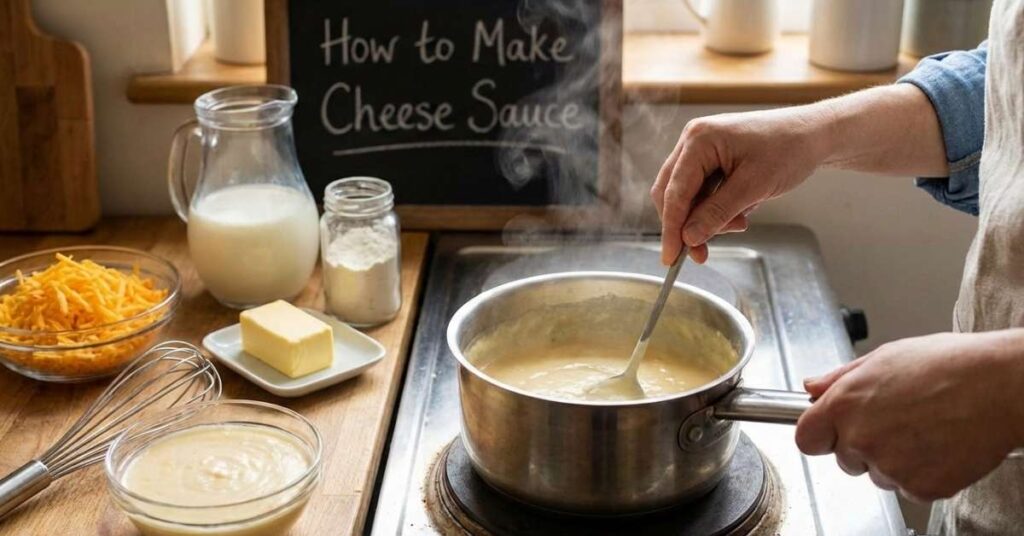
How to make cheese sauce is one of those kitchen skills that instantly levels up your cooking. A good cheese sauce turns simple foods into comfort classics — fries become irresistible, macaroni becomes creamy and rich, and vegetables suddenly disappear from the plate. Yet for many home cooks, cheese sauce feels temperamental: too thick, too thin, grainy, or split.
This guide is designed to change that.
Below, you’ll learn exactly how to make cheese sauce from scratch, using a proven method that works every time. You’ll also discover how to make cheese sauce for fries, how to make cheese sauce for macaroni, how to make cheese sauce with Velveeta, and how to make cheese sauce without flour — all in one comprehensive, SEO-optimized resource that feels human, practical, and genuinely helpful.
What Is Cheese Sauce?
Cheese sauce is a smooth, emulsified sauce made by gently melting cheese into a warm liquid base. Unlike simply melting cheese, a proper cheese sauce stays creamy, glossy, and stable, even when reheated correctly.
At its core, classic cheese sauce is built on a béchamel-style base:
- Fat (butter)
- Thickener (flour)
- Liquid (milk)
- Cheese (added gently at the end)
This structure allows the cheese to melt without breaking — the key difference between a silky sauce and a grainy mess.
Why Homemade Cheese Sauce Beats Store-Bought
Many people reach for jarred cheese sauce because it feels convenient. But homemade cheese sauce has clear advantages:
- Better flavor — real cheese, not processed fillers
- Better texture — thick, creamy, and customizable
- More control — salt, richness, sharpness, consistency
- Versatility — works for fries, pasta, vegetables, nachos, and more
Most importantly, once you understand the method, cheese sauce becomes one of the easiest sauces you’ll ever make.
Ingredients for the Best Cheese Sauce (And Why They Matter)
Instead of just listing ingredients, let’s look at what each one actually does.
| Ingredient | Purpose | Why It Matters |
| Butter | Fat base | Creates richness and helps form the roux |
| Flour | Thickener | Stabilizes the sauce and prevents separation |
| Milk | Liquid base | Creates creaminess and balance |
| Cheese | Flavor | Provides body, taste, and texture |
Choosing the Best Cheese for Cheese Sauce
Not all cheese melts the same way. For a smooth cheese sauce, choose cheeses with good melting properties.
| Cheese Type | Best Use |
| Sharp cheddar | Classic cheese sauce, macaroni |
| Mild cheddar | Kid-friendly, smooth texture |
| Gruyère | Extra creamy, slightly nutty |
| Monterey Jack | Very smooth, mild |
| Velveeta | Ultra-smooth, foolproof melting |
IMPORTANT: Avoid pre-shredded cheese when possible. It contains anti-caking agents that make sauces grainy.
How to Make Cheese Sauce (Step-by-Step)
This is the core method that everything else builds on.
Step 1: Make the Roux
Melt butter over medium-low heat. Add flour and whisk continuously for about 1 minute. The mixture should look smooth and slightly bubbly, not browned.
Why this matters: The roux thickens the sauce without making it taste floury.
Step 2: Add Milk Slowly
Gradually pour in warm milk while whisking. The mixture will thicken, then smooth out as more milk is added.
Tip: Adding milk too fast is the most common cause of lumps.
Step 3: Thicken Gently
Cook the mixture until it lightly coats the back of a spoon. Do not boil.
Step 4: Add Cheese Off the Heat
Remove the pan from heat and add shredded cheese a handful at a time, stirring until melted.
IMPORTANT: High heat is the enemy of smooth cheese sauce.
How to Make Smooth Cheese Sauce (No Lumps, No Graininess)
If you’ve ever wondered why cheese sauce turns gritty, here’s the truth: cheese proteins seize when overheated.
To keep your sauce smooth:
- Use low heat
- Add cheese after removing from heat
- Stir gently, don’t whisk aggressively
- Use high-quality melting cheese
A smooth cheese sauce should look glossy, velvety, and pourable, not stiff or oily.
How to Fix Cheese Sauce Problems (Real Solutions)
Even experienced cooks make mistakes. Here’s how to fix them.
Cheese Sauce Too Thick
Stir in warm milk one tablespoon at a time until loosened.
Cheese Sauce Too Thin
Return to low heat and simmer gently, or add a small slurry of milk and flour.
Grainy or Clumpy Sauce
Remove from heat immediately. Stir in a splash of warm milk and whisk gently.
Split or Oily Sauce
This usually means overheating. Blend briefly with an immersion blender to re-emulsify.
“Cheese sauce is forgiving — if you know how to listen to it.”
How to Make Cheese Sauce for Fries
How to make cheese sauce for fries requires a slightly thinner, pourable consistency.
Adjustments:
- Add an extra ¼ cup milk
- Use mild or medium cheddar
- Keep the sauce warm, not hot
This style works beautifully for:
- Loaded fries
- Nachos
- Pretzel dipping sauce
How to Make Cheese Sauce for Macaroni
How to make cheese sauce for macaroni focuses on richness and cling.
Tips:
- Use sharp cheddar for bold flavor
- Keep the sauce thicker
- Stir pasta in while the sauce is warm
This creates that classic creamy mac and cheese texture without dryness.
How to Make Cheese Sauce with Velveeta
How to make cheese sauce with Velveeta is ideal for beginners.
Method:
- Skip the roux
- Melt Velveeta slowly with milk
- Stir constantly over low heat
Velveeta melts smoothly because it’s designed to emulsify, making it nearly impossible to break.
How to Make Cheese Sauce Without Flour
If you’re gluten-free or avoiding flour, how to make cheese sauce without flour is still completely doable.
Popular alternatives:
- Cornstarch slurry
- Evaporated milk + cheese
- Cream cheese base
Cornstarch works best when added cold and heated gently.
What to Serve with Cheese Sauce
Cheese sauce is incredibly versatile. It pairs beautifully with:
- Fries and wedges
- Macaroni and pasta
- Broccoli, cauliflower, and vegetables
- Nachos and tortilla chips
- Baked potatoes
- Soft pretzels
This flexibility is why mastering cheese sauce is such a valuable kitchen skill.
How to Store and Reheat Cheese Sauce
Cheese sauce can be stored, but reheating requires care.
Storage tips:
- Refrigerate up to 3 days
- Store in an airtight container
Reheating tips:
- Reheat slowly over low heat
- Add milk to loosen
- Stir gently to avoid splitting
Freezing is not recommended, as dairy sauces tend to separate.
READ MORE >>> How to Make Hot Honey Sauce (Easy Sweet & Spicy Recipe)
Common Cheese Sauce Mistakes to Avoid
- Overheating the cheese
- Using pre-shredded cheese
- Skipping the roux step
- Adding cheese too early
- Boiling the sauce
Avoiding these mistakes makes cheese sauce predictable and stress-free.
Frequently Asked Questions
What cheese melts best for cheese sauce?
Cheddar, Monterey Jack, Gruyère, and Velveeta melt the smoothest.
Why does cheese sauce get grainy?
Usually from overheating or using low-quality cheese.
Can I make cheese sauce ahead of time?
Yes, gently reheat with added milk.
How do I thicken cheese sauce naturally?
Simmer gently or add more cheese.
Final Thoughts: Foolproof Cheese Sauce Every Time
Learning how to make cheese sauce is about understanding heat, patience, and balance. Once you master the base method, you can adapt it endlessly — from cheese sauce for fries, to macaroni, to Velveeta versions, to flour-free alternatives.
With the techniques in this guide, you’re not just following a recipe — you’re building confidence. And that’s what turns cooking from stressful into satisfying.
Smooth, creamy cheese sauce is no longer a mystery — it’s a skill you own.