
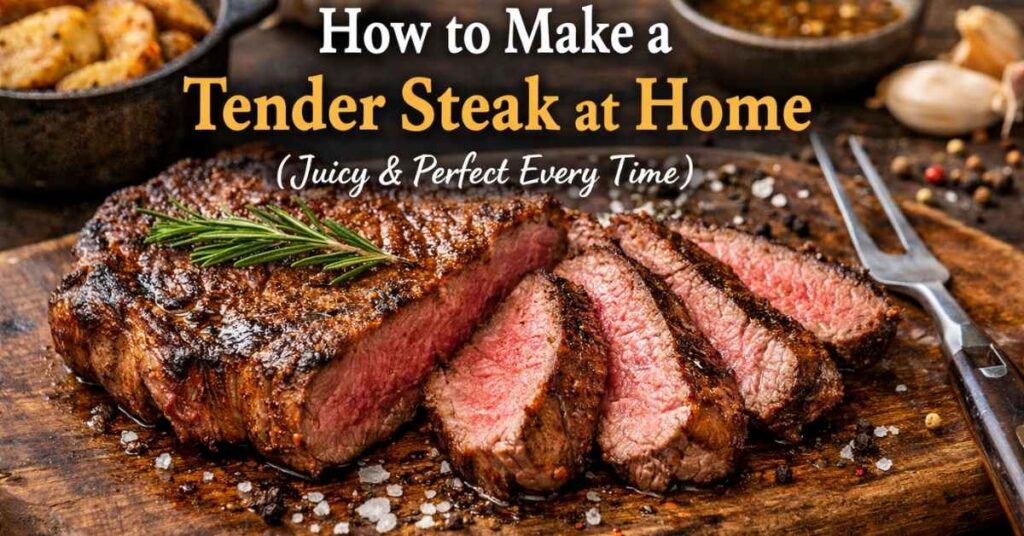
How to make a tender steak is one of the most searched cooking questions—and for a good reason. Many home cooks struggle with steak turning out tough, chewy, or dry, even when using good-quality meat. The truth is, making a juicy, tender steak isn’t about luck or expensive cuts. It’s about understanding meat science, preparation, and cooking technique.
In this complete guide, you’ll learn how to make steak tender every time, whether you’re using a premium ribeye or a budget-friendly cut. This article combines professional cooking techniques, steakhouse secrets, and simple home-cooking tips—all written in an easy, human-friendly way.
Why Is My Steak Tough? (Understanding the Real Problem)
Before learning how to make a tender steak, it’s important to understand why steak becomes tough in the first place.
Muscle Fibers and Connective Tissue Explained
Beef is made of muscle fibers held together by connective tissue containing collagen. When steak is cooked improperly, muscle fibers tighten and squeeze out moisture, making the meat chewy.
Key fact:
Tender steak comes from relaxed muscle fibers and partially broken-down collagen.
How Overcooking Affects Steak Tenderness
Overcooking causes protein denaturation, where meat fibers contract too much. This results in:
- Moisture loss
- Dry texture
- Tough, rubbery steak
Even the best steak cuts can turn tough if cooked past their ideal temperature.
Why Some Steak Cuts Are Naturally Tough
Not all steak cuts are equal. Muscles that work harder (like flank or chuck) have more connective tissue, while less-used muscles (like filet mignon) are naturally tender.
Best Steak Cuts for Tenderness (Cut Selection Matters)
Choosing the right cut is the first step in making a tender steak.
Naturally Tender Steak Cuts
These cuts require minimal tenderizing:
- Filet mignon – extremely tender, low connective tissue
- Ribeye steak – tender with rich marbling
- New York strip steak – balanced tenderness and flavor
Tough but Flavorful Cuts (And How to Fix Them)
These cuts need proper tenderizing techniques:
- Flank steak
- Chuck steak
- Round steak
With the right method, even these can become juicy and tender.
Best Budget Steak Cuts That Can Be Made Tender
Affordable options that work well with proper preparation:
- Flat iron steak
- Skirt steak
- Blade steak
Pro tip: Budget cuts respond best to marinating, dry brining, or slow cooking.
How to Tenderize Steak Before Cooking (Most Important Section)
This is where most competitors stop—but we go deeper.
Dry Brining (Salt Method for Tender Steak)
Dry brining is one of the best ways to tenderize steak naturally.
How it works:
Salt draws moisture out, dissolves proteins, then reabsorbs into the meat, breaking down muscle fibers.
| Steak Thickness | Dry Brine Time |
| Thin steak | 30–45 minutes |
| Thick steak | 2–24 hours |
Dry brining improves:
- Tenderness
- Flavor penetration
- Moisture retention
Marinades for Steak Tenderness
Marinades soften steak using acids or enzymes.
Acid-based marinades: vinegar, lemon juice
Enzyme-based marinades: pineapple, papaya
Important: Over-marinating can make steak mushy.
Ideal marinating time is 30 minutes to 4 hours, depending on the cut.
Mechanical Tenderizing Techniques
Physical methods break down fibers:
- Meat mallet
- Scoring steak surface
This method works well for cheap steak cuts.
Baking Soda Method (Optional but Effective)
Baking soda raises surface pH, preventing proteins from tightening.
Use carefully:
- ½ teaspoon per pound
- Rinse thoroughly after 15 minutes
This is useful for thin, tough cuts, not premium steaks.
Preparing Steak the Right Way Before Cooking
Many people miss this step, but preparation plays a huge role in tenderness.
Should Steak Be Room Temperature Before Cooking?
Letting steak sit for 20–30 minutes helps it cook more evenly. While it won’t magically tenderize meat, it reduces the risk of overcooking.
How Moisture Affects Steak Texture
Surface moisture prevents proper searing. Always pat steak dry before cooking to achieve the Maillard reaction, which improves texture and flavor.
Best Oil and Seasoning for Tender Steak
High-smoke-point oils like avocado or canola oil are ideal.
Season simply with salt and pepper—over-seasoning can mask natural flavor.
Best Cooking Methods for a Tender Steak
Cooking technique determines whether steak stays juicy or turns tough.
Pan-Seared Steak (Best for Beginners)
Pan-searing creates a crust while locking in moisture.
Best practices:
- Preheat pan properly
- Avoid overcrowding
- Flip only once
Grilling Steak Without Drying It Out
Grilling adds flavor but requires heat control.
Key rule:
Sear first, then move to indirect heat to finish cooking.
Reverse Sear Method for Thick Steaks
This method cooks steak slowly, then finishes with a hot sear.
Why it works:
- Even doneness
- Less moisture loss
- Superior tenderness
Sous Vide Steak for Ultimate Tenderness
Sous vide maintains precise temperature control, breaking down collagen gently.
Restaurants often use this method for perfectly tender steak.
Steak Doneness & Temperature Guide
Correct internal temperature is critical.
| Doneness | Internal Temp |
| Rare | 120–125°F |
| Medium-rare | 130–135°F |
| Medium | 140–145°F |
| Well-done | 160°F+ |
Medium-rare is widely considered the most tender steak doneness.
The Science Behind a Tender Steak (EEAT Section)
Understanding the science builds confidence and authority.
Protein Denaturation and Moisture Retention
As steak heats, proteins tighten. Gentle cooking minimizes moisture loss.
Collagen Breakdown During Cooking
Slow cooking converts collagen into gelatin, improving tenderness.
The Maillard Reaction and Texture
This chemical reaction creates crust and flavor without drying the steak.
Resting Steak & Slicing Technique (Huge Ranking Opportunity)
Why Resting Steak Makes It Juicier
Resting allows juices to redistribute instead of spilling out.
Rest time rule:
5 minutes per inch of thickness.
How to Slice Steak Against the Grain
Cutting against the grain shortens muscle fibers, making steak easier to chew.
Common Mistakes That Make Steak Tough
Many home cooks unknowingly ruin steak.
Cooking Steak Straight from the Fridge
Overcooking and High Heat Errors
Cutting Steak Too Soon
Using the Wrong Cut for the Method
Avoiding these mistakes dramatically improves tenderness.
READ MORE>>>Food Trends FHThopeFood: Future Eating, Health & Sustainability
How Restaurants Make Steak So Tender
Professional kitchens rely on precision and consistency.
Steakhouse Tenderizing Techniques
- Dry aging
- Controlled salting
- Precise temperature monitoring
Butter Basting & Finishing Techniques
Butter basting adds fat, improving moisture and mouthfeel.
“Tender steak is about patience, not pressure.” — Professional Chef Insight
How to Make Cheap Steak Tender (High-Value Section)
Affordable steaks can still be delicious.
Best Methods for Cheap Cuts
- Marinades
- Mechanical tenderizing
- Slow cooking
Slow vs Fast Cooking for Tough Meat
| Method | Best For |
| Slow cooking | Tough cuts |
| Fast searing | Tender cuts |
Frequently Asked Questions
How do I make a tough steak tender?
Use dry brining, proper cooking temperature, and slice against the grain.
Can I tenderize steak without a marinade?
Yes, salt alone is highly effective.
Does salt really make steak tender?
Yes. Salt breaks down muscle proteins and improves moisture retention.
Why is my steak chewy even when cooked correctly?
Likely due to the cut or slicing with the grain.
Final Tips for Making the Perfect Tender Steak Every Time
Tender Steak Checklist
- Choose the right cut
- Salt early
- Control temperature
- Rest before slicing
Quick Recap
Making a tender steak isn’t complicated—it’s intentional. When you combine proper preparation, correct cooking methods, and basic meat science, you can consistently create juicy, tender steak at home.
Master these techniques, and you’ll never ask how to make a tender steak again—because you’ll already know.