
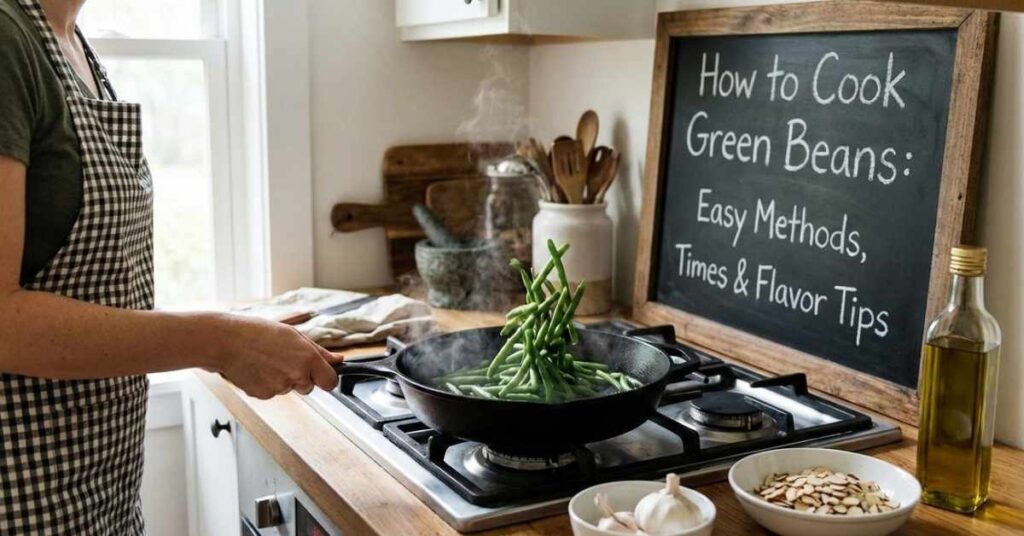
How to cook green beans is one of those simple kitchen skills that seems obvious—until the beans turn mushy, bland, or unevenly cooked. Green beans are easy to prepare, but small details like heat, timing, and seasoning make a huge difference between dull vegetables and a side dish everyone actually enjoys.
This complete guide will show you how to cook green beans the right way, whether you’re using the stove, a pan, the oven, a microwave, an air fryer, or even starting with canned green beans. You’ll learn exact cooking times, how to keep beans bright green and crisp-tender, and how to add flavor without overcomplicating things.
The goal is simple: perfect green beans, every time, no matter your method or skill level.
Why the Cooking Method Matters
Green beans are delicate. Cook them too long and they lose their color, texture, and flavor. Cook them properly and they become fresh, slightly sweet, and satisfying.
Different methods give different results:
- Stove and pan cooking delivers quick, crisp-tender beans
- Oven roasting adds caramelized flavor
- Air frying creates lightly blistered edges
- Microwaving offers speed and convenience
- Canned beans need special handling to improve texture
Knowing which method to use—and when—is the secret to success.
Quick Answer: What’s the Best Way to Cook Green Beans?
The best way to cook green beans depends on how you like them:
- For crisp-tender and fresh, cook green beans on the stove in a pan.
- For deep flavor and slight char, roast them or use an air fryer.
- For fast and simple, microwave them.
- For maximum convenience, canned green beans work with the right seasoning.
There’s no single “correct” way—only the way that fits your meal, time, and taste.
How to Prepare Green Beans Before Cooking
Before learning how to cook green beans, proper preparation is essential.
Choosing Fresh Green Beans
Fresh green beans should be bright green, firm, and snap cleanly when bent. Avoid beans that look limp or have brown spots.
Washing and Trimming
Rinse green beans under cold water. Trim the stem ends with a knife or snap them off by hand. Trimming both ends is optional and mostly aesthetic.
Fresh vs Frozen vs Canned Green Beans
Fresh green beans offer the best texture. Frozen green beans are convenient but cook faster. Canned green beans are fully cooked and require gentle reheating rather than true cooking.
How Long Does It Take to Cook Green Beans?
Cooking time depends on the method and whether the beans are fresh, frozen, or canned.
| Cooking Method | Time | Texture Result | Best Use |
| Stove / Pan | 5–8 minutes | Crisp-tender | Everyday meals |
| Boiling | 3–5 minutes | Soft | Salads, casseroles |
| Steaming | 5–7 minutes | Tender | Healthy sides |
| Oven Roasting | 15–20 minutes | Caramelized | Flavor-focused dishes |
| Air Fryer | 8–12 minutes | Lightly blistered | Quick roasting |
| Microwave | 3–5 minutes | Tender | Fast meals |
| Canned Beans | 5 minutes | Soft | Convenience cooking |
IMPORTANT: Overcooking is the number one reason green beans turn dull and mushy.
How to Cook Green Beans on the Stove
Learning how to cook green beans on stove is the most useful method because it’s fast, flexible, and reliable.
How to Cook Green Beans in a Pan (Sautéed Method)
This is the classic approach and the best way to keep beans crisp-tender.
Heat a wide pan over medium-high heat and add olive oil. Once hot, add the green beans in a single layer. Stir occasionally so they cook evenly. After 5–7 minutes, the beans should be tender but still slightly firm.
Add garlic during the last minute to avoid burning, then season with salt and pepper.
This method also answers how to cook green beans in a pan with maximum flavor and minimal effort.
How to Cook Green Beans on the Stove with Water (Boiling)
Bring a pot of salted water to a rolling boil. Add green beans and cook for 3–5 minutes until just tender. Drain immediately.
For better color and texture, transfer the beans to cold water briefly, then drain again.
Boiling works well when green beans are going into another dish or served cold.
How to Steam Green Beans on the Stove
Steaming preserves nutrients and color. Place green beans in a steamer basket over simmering water. Cover and steam for 5–7 minutes.
Steamed green beans are mild in flavor and benefit from finishing touches like butter, lemon juice, or herbs.
How to Cook Green Beans in the Oven (Roasted Green Beans)
Roasting transforms green beans by concentrating their flavor.
Preheat your oven to 425°F (220°C). Toss green beans with olive oil, salt, and pepper. Spread them out on a baking sheet so they don’t overlap.
Roast for 15–20 minutes, stirring halfway through. The beans should be tender with lightly browned edges.
Roasting is ideal when you want green beans that taste rich and satisfying.
How to Cook Green Beans in an Air Fryer
If you’re looking for speed and texture, how to cook green beans in air fryer is worth learning.
Toss green beans with a small amount of oil and seasoning. Place them in the air fryer basket in a single layer. Cook at 380°F (190°C) for 8–12 minutes, shaking halfway through.
Air-fried green beans become lightly blistered and slightly crisp without much oil.
How to Cook Green Beans in Microwave
For busy days, how to cook green beans in microwave is a lifesaver.
Place green beans in a microwave-safe dish with a few tablespoons of water. Cover loosely and microwave for 3–5 minutes, stirring halfway.
Drain excess water and season after cooking. Microwaved green beans are tender and mild, perfect for quick meals.
How to Cook Green Beans from a Can
Many people ask how to cook green beans from a can, but technically, canned beans are already cooked.
Drain and rinse them to remove excess sodium. Heat gently in a pan with olive oil or butter. Add garlic, pepper, or herbs to boost flavor.
Avoid cooking canned green beans too long—they can break down quickly.
Best Seasonings and Flavor Ideas for Green Beans
Green beans shine with simple seasoning, but variety keeps them exciting.
Basic seasoning includes olive oil, salt, and black pepper. Garlic and butter create a classic, comforting flavor. Lemon juice brightens steamed or sautéed beans.
For something different, try soy sauce and sesame oil for an Asian-style twist, or parmesan and herbs for a savory finish.
IMPORTANT: Always season after cooking when possible to avoid drawing out too much moisture.
Common Green Bean Cooking Mistakes
Most green bean problems come from a few avoidable mistakes. Overcrowding the pan causes steaming instead of sautéing. Cooking too long destroys texture. Adding garlic too early leads to bitterness.
Another common mistake is skipping salt. Green beans need seasoning to bring out their natural sweetness.
How to Tell When Green Beans Are Done
Perfectly cooked green beans should be bright green, tender when bitten, and slightly crisp. If they look dull or olive-colored, they’re overcooked.
Taste is the best test. If the bean still has a light snap without being raw, it’s ready.
Are Green Beans Healthy?
Green beans are low in calories and rich in fiber, vitamins A and C, and antioxidants. Cooking them lightly helps retain nutrients while making them easier to digest.
Steaming, sautéing, and air frying are among the healthiest methods.
READ MORE >>> How Long to Cook Ribs in Oven (Exact Times by Temperature)
How to Store and Reheat Cooked Green Beans
Cooked green beans last up to four days in the refrigerator when stored in an airtight container.
Reheat them gently on the stove or in the microwave. Avoid reheating too long to preserve texture.
Frequently Asked Questions About Cooking Green Beans
How long should green beans be cooked?
Most fresh green beans need 5–8 minutes depending on the method.
Is it better to boil or steam green beans?
Steaming preserves more nutrients and flavor than boiling.
Can you eat green beans raw?
Yes, but cooking improves digestibility and taste.
Why are my green beans bitter?
Overcooking or old beans are common causes.
Final Thoughts: The Best Way to Cook Green Beans at Home
Learning how to cook green beans well doesn’t require fancy tools or complex recipes. It comes down to choosing the right method, watching the time, and seasoning thoughtfully.
Whether you prefer stove-top cooking, pan-searing, microwaving, air frying, or working with canned green beans, the techniques in this guide will help you serve green beans that are fresh, flavorful, and perfectly cooked every single time.