
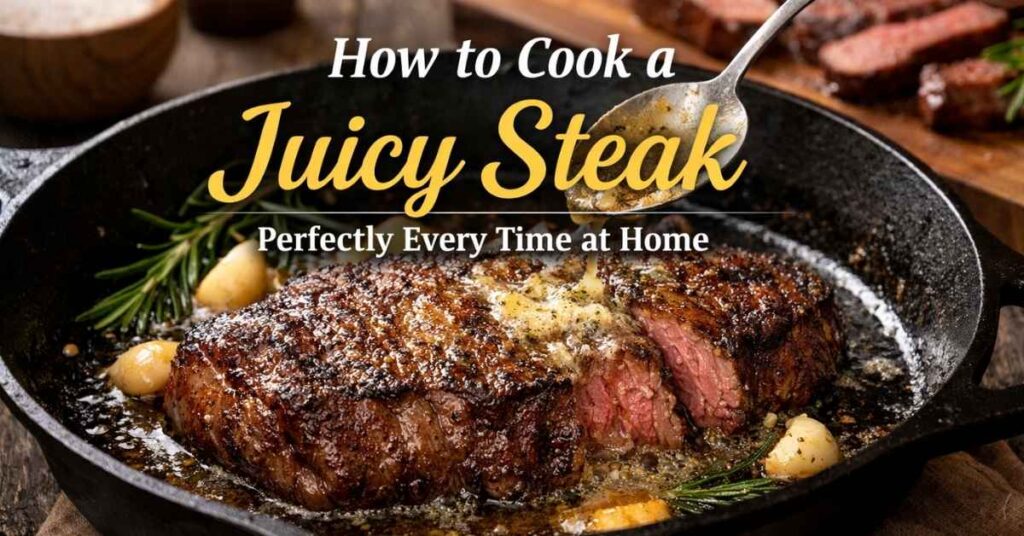
How to cook a juicy steak is one of the most searched cooking questions in the world—and for good reason. Steak is expensive, and no one wants to ruin a beautiful cut of meat by overcooking it, drying it out, or making it tough and chewy. The good news? Cooking a juicy, tender, steakhouse-quality steak at home is absolutely possible, even if you’re a beginner.
This in-depth guide combines proven techniques used by chefs, insights from top-ranking competitor recipes, and SEO-backed best practices to help you cook a steak that’s flavorful, moist, and perfectly cooked every single time. Whether you’re pan-searing, oven-finishing, or grilling, this article covers everything you need to know—without complicated jargon.
Why Steaks Turn Dry (And How to Prevent It)
Before learning how to cook steak properly, it’s important to understand why steaks become dry in the first place. Most home cooks make the same few mistakes.
The most common reason is overcooking. When steak is cooked beyond its ideal internal temperature, muscle fibers tighten and squeeze out moisture. Another issue is cooking steak straight from the fridge. A cold steak cooks unevenly, leading to a dry exterior and undercooked center.
Low heat is another hidden problem. Cooking steak slowly without proper searing prevents crust formation, allowing juices to escape. Finally, slicing steak immediately after cooking causes juices to spill out instead of redistributing inside the meat.
The solution is simple: high heat, correct timing, proper resting, and the right preparation.
Choosing the Best Steak for Juiciness
Not all steaks are created equal. If your goal is a juicy and tender steak, the cut you choose matters just as much as how you cook it.
Best Steak Cuts for Juicy Results
Some cuts naturally retain moisture better due to fat content and muscle structure:
- Ribeye – Highly marbled and extremely juicy
- New York Strip – Balanced flavor and tenderness
- Sirloin – Leaner but still juicy when cooked correctly
- Filet Mignon – Very tender, mild flavor, less fat
Cuts with more intramuscular fat (marbling) stay juicier because fat melts during cooking, basting the steak from the inside.
Steak Thickness Matters
Thickness is often overlooked. A steak that’s too thin cooks too fast and dries out easily.
Ideal thickness:
- 1 to 1.5 inches for pan-searing
- 1.5 to 2 inches for reverse searing or grilling
Thicker steaks allow better control over doneness and moisture retention.
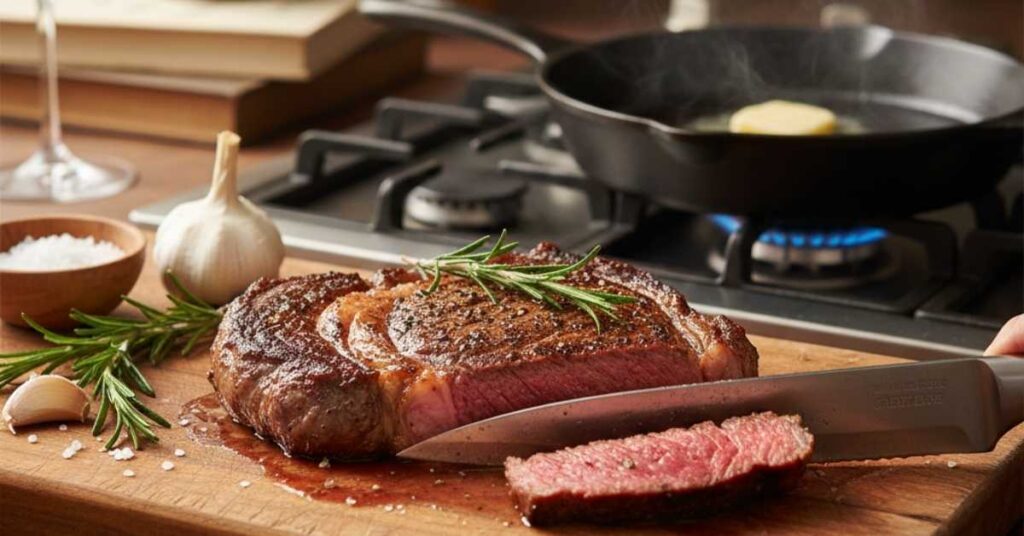
Pre-Cooking Preparation for a Juicy Steak
Great steak starts before it hits the pan.
Bring Steak to Room Temperature
Remove the steak from the refrigerator 30–45 minutes before cooking. This ensures even cooking and prevents moisture loss.
“Cold steak is the fastest way to uneven doneness.” — Professional kitchen rule
Pat Dry and Season Properly
Moisture on the surface prevents proper searing. Always pat the steak dry with paper towels.
Season generously with:
- Kosher salt
- Freshly ground black pepper
Salt enhances flavor and helps create a crust. You can salt right before cooking or up to 24 hours ahead for deeper seasoning.
Best Oil and Fat for Cooking Steak
High-heat cooking requires oils with a high smoke point:
- Avocado oil
- Canola oil
- Grapeseed oil
Butter is added later, during basting, not at the start.
Best Cooking Methods for a Juicy Steak
There’s more than one way to cook steak, but some methods are more reliable than others.
Pan-Seared Steak (Most Reliable Method)
Pan-searing in a cast iron skillet is the most popular and consistent way to cook a juicy steak at home.
The pan retains heat well, creates a deep crust, and allows easy butter basting.
Oven-Finished Steak
For thicker cuts, start on the stovetop and finish in the oven. This prevents burning while ensuring the center cooks evenly.
Grilled Steak
Grilling adds smoky flavor but requires careful heat control. Use direct heat for searing and indirect heat to finish cooking.
Reverse Sear Method (Often Missed by Competitors)
Reverse searing involves cooking the steak slowly at low heat first, then finishing with a high-heat sear.
This method:
- Produces even doneness
- Locks in juices
- Is perfect for thick steaks
How Long to Cook Steak: Time and Temperature Guide
Cooking time alone is unreliable. Internal temperature is king.
Steak Doneness Chart
| Doneness | Internal Temperature | Texture |
| Rare | 120–125°F (49–52°C) | Very soft |
| Medium Rare | 130–135°F (54–57°C) | Juicy and tender |
| Medium | 140–145°F (60–63°C) | Slightly firm |
| Medium Well | 150–155°F (65–68°C) | Less juicy |
| Well Done | 160°F+ (71°C+) | Dry |
Use a meat thermometer and remove steak 5°F before target temperature due to carryover cooking.
Butter Basting: The Steakhouse Secret
Butter basting is what separates average steak from restaurant-quality steak.
Once the steak is seared:
- Add unsalted butter
- Toss in garlic cloves
- Add fresh thyme or rosemary
Tilt the pan and spoon melted butter over the steak repeatedly. This adds flavor and moisture while finishing the cook.
Resting the Steak: The Step Everyone Skips
Resting is non-negotiable if you want a juicy steak.
After cooking:
- Transfer steak to a plate
- Tent loosely with foil
- Rest for 5–10 minutes
Resting allows juices to redistribute instead of spilling out.
READ MORE>>>Homemade Mayo Recipe: Easy, Fail-Proof & Ready in Minutes
How to Slice Steak to Keep It Juicy
Always slice steak against the grain. This shortens muscle fibers, making each bite more tender.
Use a sharp knife and slice just before serving.
READ MORE>>>Homemade Mayo Recipe: Easy, Fail-Proof & Ready in Minutes
Common Steak Cooking Mistakes to Avoid
Many dry steaks are caused by avoidable errors:
- Cooking on low heat
- Overcrowding the pan
- Pressing steak while cooking
- Skipping the thermometer
- Cutting steak too early
Avoiding these mistakes alone dramatically improves results.
How to Cook a Juicy Steak for Beginners
If you want the simplest method, follow this:
- Choose a 1-inch ribeye or strip steak
- Bring to room temperature
- Pat dry and season generously
- Heat cast iron pan until very hot
- Sear 3–4 minutes per side
- Butter baste
- Rest before slicing
This beginner-friendly method delivers juicy steak every time.
How to Make Steak Juicy Without a Grill or Cast Iron
No fancy equipment? No problem.
A heavy stainless steel pan works well. You can also use an oven-only method by broiling, but watch closely to avoid overcooking.
Juiciness comes from technique, not tools.
Frequently Asked Questions
How do you keep steak juicy while cooking?
Use high heat, cook to the correct internal temperature, and rest the steak before slicing.
What is the best temperature to cook a juicy steak?
Medium rare (130–135°F) offers the best balance of juiciness and tenderness.
Should I rest steak after cooking?
Yes. Resting is essential to keep juices inside the meat.
Why does my steak dry out in the pan?
Overcooking, low heat, and skipping rest time are the most common causes.
Can I cook a juicy steak without butter?
Yes, but butter basting adds moisture and flavor. Olive oil alone works if needed.
Final Thoughts: How to Cook a Juicy Steak Like a Pro
Cooking a juicy steak isn’t about luck it’s about understanding heat, timing, and technique. When you choose the right cut, cook at high heat, monitor temperature, baste with butter, and let the steak rest, you create results that rival any steakhouse.
With this guide, you now know how to cook a juicy steak confidently, consistently, and deliciously. The more you practice, the better your instincts become and soon, perfect steak will feel effortless.
Juicy steak every time isn’t a myth. It’s a method.