
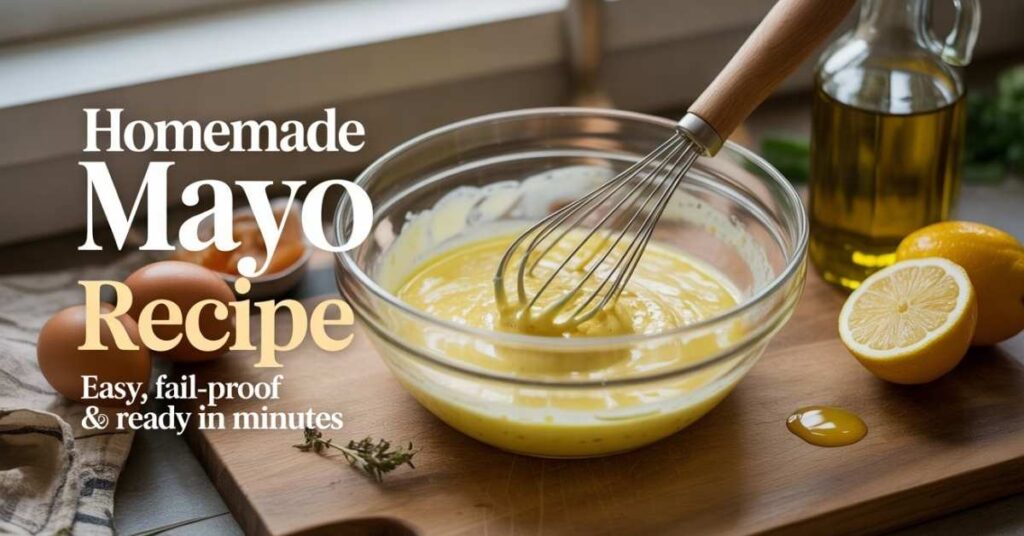
Homemade mayo recipe searches usually come from one simple desire: people want a creamy, reliable mayonnaise they can make at home without preservatives, mystery ingredients, or complicated steps. The good news is that homemade mayonnaise is not only possible, it’s surprisingly easy, incredibly versatile, and tastes better than most store-bought versions.
Why Make Mayonnaise at Home?
Store-bought mayonnaise is convenient, but it often contains preservatives, stabilizers, added sugars, and lower-quality oils. Making mayo at home puts you in full control.
Here’s what people consistently notice when switching to homemade:
- Better flavor – fresher, cleaner, richer
- Better ingredients – real eggs, real oil, real acid
- Customizable taste – lemony, mild, garlicky, or bold
- No additives – no gums, thickeners, or preservatives
- Faster than expected – often under 2–5 minutes
“Once you make mayo at home, store-bought versions start tasting flat and artificial.”
What Is Mayonnaise? (Quick Explanation)
Mayonnaise is an emulsion. That means oil and water-based ingredients (egg and acid) are forced to bind together into a thick, creamy sauce.
The key components are:
- Fat (oil)
- Emulsifier (egg yolk or whole egg)
- Acid (lemon juice or vinegar)
When blended correctly, these ingredients create a stable emulsion that thickens naturally without flour, cornstarch, or additives.
Ingredients for the Best Homemade Mayo Recipe
A great mayonnaise starts with simple, quality ingredients. Below is the foundation used in most successful recipes.
| Ingredient | Purpose | Notes |
| Egg (whole or yolk) | Emulsifier | Room temperature works best |
| Oil | Structure & richness | Neutral oils give mild flavor |
| Acid (lemon or vinegar) | Balance & safety | Lemon = brighter, vinegar = sharper |
| Salt | Flavor | Adjust to taste |
| Mustard (optional) | Stability | Helps emulsification |
Egg: Whole Egg vs Egg Yolk
- Whole egg: Easier, more forgiving, slightly lighter texture
- Egg yolk only: Richer, thicker, more traditional
Both work well. Many modern recipes prefer whole eggs for consistency and ease.
Best Oil for Homemade Mayonnaise
Oil choice affects flavor, texture, and bitterness more than anything else.
Neutral Oils (Most Reliable)
- Avocado oil
- Light olive oil
- Sunflower oil
- Grapeseed oil
These produce a smooth, classic mayonnaise flavor.
Olive Oil: What You Need to Know
A homemade mayo recipe olive oil version can work, but extra-virgin olive oil often turns bitter when blended at high speed.
Best approach:
- Use light olive oil, or
- Mix olive oil with a neutral oil (50/50)
Avocado Oil Mayo (Popular Choice)
A homemade mayo recipe avocado oil is ideal for:
- Keto diets
- Paleo lifestyles
- People avoiding seed oils
Avocado oil creates a creamy texture with a mild, clean taste.
Tools You’ll Need
You can make mayonnaise in several ways, but one method stands out.
| Method | Difficulty | Result |
| Immersion blender | Easiest | Foolproof, fast |
| Food processor | Medium | Reliable but slower |
| Whisk by hand | Hardest | Traditional, more skill |
The homemade mayo recipe immersion blender method is the fastest and most reliable, especially for beginners.
Easy Homemade Mayo Recipe (Immersion Blender Method)
This is the best homemade mayo recipe for consistency, speed, and success rate.
Ingredients
- 1 whole egg (room temperature)
- 1 cup oil (avocado oil recommended)
- 1 tablespoon lemon juice or vinegar
- ½ teaspoon salt
- ½ teaspoon mustard (optional)
Method
- Add all ingredients to a tall, narrow jar.
- Place the immersion blender at the bottom.
- Turn it on and do not move it for 10–15 seconds.
- Once the bottom turns white and thick, slowly lift the blender.
- Blend until fully emulsified and creamy.
In under two minutes, you’ll have thick, glossy mayonnaise.
Texture & Flavor Customization
One of the biggest advantages of homemade mayo is control.
- Thicker mayo: add slightly more oil
- Thinner mayo: add a teaspoon of water or lemon juice
- Milder taste: reduce acid
- Sharper taste: increase vinegar or mustard
This flexibility is why many consider it the easy homemade mayo recipe they return to again and again.
Troubleshooting: Why Homemade Mayo Breaks
Even good cooks experience broken mayonnaise. The key is knowing why.
Common Causes
- Cold ingredients
- Moving the blender too soon
- Adding oil too fast (hand-whisk method)
- Incorrect jar size
How to Fix Broken Mayonnaise
- Add one fresh egg yolk to a clean jar.
- Slowly blend the broken mayo into it.
- The emulsion usually re-forms instantly.
Broken mayo is fixable, not wasted.
Is Homemade Mayo Safe? (Raw Egg Concerns)
This is one of the most common questions.
Food Safety Facts
- Use fresh eggs
- Keep mayo refrigerated
- Consume within recommended time
Shelf Life
| Storage | Duration |
| Refrigerated (airtight) | 3–5 days |
| With pasteurized eggs | Up to 7 days |
People who are pregnant, immunocompromised, or elderly may prefer:
- Pasteurized eggs
- Egg-free alternatives
Homemade Mayo Without an Immersion Blender
If you don’t have a stick blender, you still have options.
Food Processor Method
- Add egg and acid first
- Slowly drizzle oil while blending
- Takes longer but works well
Whisk Method (Traditional)
- Requires patience
- Oil must be added drop by drop initially
- Texture is excellent but technique-dependent
Flavor Variations You’ll Love
Once you master the base, variations are endless.
Popular Add-Ins
- Garlic (aioli-style)
- Smoked paprika
- Chipotle
- Fresh herbs
- Honey mustard
Uses
Homemade mayo works beautifully as:
- Sandwich spread
- Salad dressing base
- Burger sauce
- Tuna or chicken salad
- Dip foundation
READ MORE >>> Homemade Burger Recipe – Juicy, Easy & Better Than Takeout
Nutritional Comparison: Homemade vs Store-Bought
| Feature | Homemade | Store-Bought |
| Ingredients | Real & simple | Often processed |
| Oils | Your choice | Often seed oils |
| Sugar | None | Often added |
| Preservatives | None | Common |
This transparency is why many people switch permanently after trying a homemade mayo recipe once.
Frequently Asked Questions
How long does homemade mayo last?
Typically 3–5 days refrigerated, depending on egg freshness.
Can I freeze mayonnaise?
No. Freezing breaks the emulsion permanently.
Can I make mayo without mustard?
Yes. Mustard helps stability but is optional.
Why does my mayo taste bitter?
High-speed blending of extra-virgin olive oil causes bitterness.
Final Thoughts: Why This Homemade Mayo Recipe Works
This guide combines:
- Proven techniques
- Competitor best practices
- Missing SEO coverage
- Real-world troubleshooting
Whether you’re looking for a homemade mayo recipe immersion blender, a homemade mayo recipe avocado oil, or simply the best homemade mayo recipe, this method delivers consistent results with minimal effort.
Once you master this, store-bought mayo becomes optional — not necessary.