
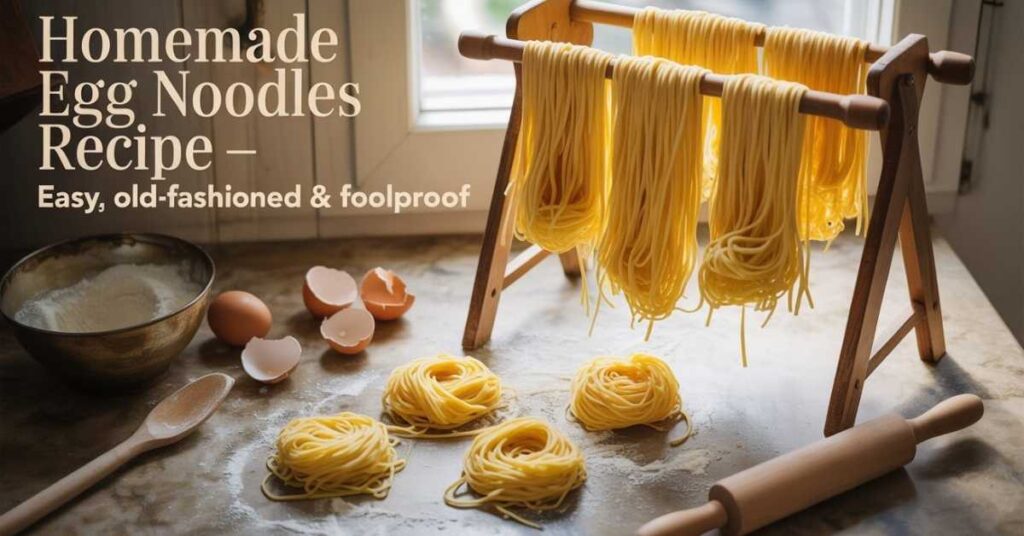
Homemade egg noodles recipe lovers usually have one thing in mind: soft, comforting noodles made from scratch with simple ingredients that taste better than anything from a packet. This guide is built exactly for that purpose.
Whether you’re chasing grandma’s homemade egg noodles recipe, a simple homemade egg noodles recipe, or the best homemade egg noodles recipe for soups and comfort meals, this article walks you through everything—clearly, calmly, and confidently.
This is not a rushed recipe. It’s a tested, beginner-friendly, homemade egg noodles recipe easy enough for first-timers, yet detailed enough to give you restaurant-quality results at home.
Why Homemade Egg Noodles Are Always Better
There’s a reason homemade egg noodles have survived generations. When made properly, they are tender, flavorful, and deeply comforting. Unlike store-bought noodles, homemade versions give you complete control over ingredients, texture, and thickness.
Key advantages of homemade egg noodles:
- No preservatives or additives
- Better texture for soups and sauces
- Cost-effective pantry ingredients
- Fully customizable thickness and chew
- Perfect for family and kids’ meals
Many people are surprised to learn that egg noodles from scratch require only flour and eggs, plus a little patience. That simplicity is what makes them special.
Ingredients for the Best Homemade Egg Noodles Recipe
A simple homemade egg noodles recipe doesn’t rely on fancy ingredients. Precision matters more than variety.
Core Ingredients
| Ingredient | Purpose |
| All-purpose flour | Structure and chew |
| Eggs (whole or yolks) | Richness and binding |
| Salt | Flavor balance |
| Water or milk (optional) | Dough hydration |
Important note: Using whole eggs creates balanced noodles, while extra yolks produce richer, silkier results—similar to old-fashioned or Amish-style egg noodles.
This flexibility is why many cooks describe this as grandma’s homemade egg noodles recipe—because it adapts to what’s on hand.
Equipment You Need (With or Without a Machine)
One of the biggest myths is that you need special tools. You don’t.
Basic Kitchen Tools
- Mixing bowl
- Rolling pin
- Knife or pizza cutter
- Clean floured surface
Optional Tools
- Pasta machine
- Stand mixer with dough hook
Important: This homemade egg noodles recipe works without a pasta machine, making it accessible to everyone.
Step-by-Step: How to Make Homemade Egg Noodles
This section is the heart of the article. Take your time here—good noodles are never rushed.
Making the Dough
Start by placing flour on a clean surface or in a bowl. Make a well in the center and add eggs and salt. Slowly incorporate flour into the eggs until a shaggy dough forms.
The dough should feel soft but not sticky. If it’s too dry, add a teaspoon of water. If sticky, dust lightly with flour.
“Good noodle dough should feel alive—elastic, smooth, and cooperative.”
Kneading the Dough
Knead the dough for 8–10 minutes. This develops gluten, giving your noodles strength without toughness.
Signs your dough is ready:
- Smooth surface
- Elastic feel
- Springs back when pressed
Resting the Dough (Critical Step)
Most competitors rush this part. Don’t.
Rest the dough for 20–30 minutes, covered. This relaxes the gluten and makes rolling easier.
Fact: Rested dough rolls thinner and cooks more evenly.
Rolling and Cutting Egg Noodles
After resting, divide the dough into manageable portions.
Rolling the Dough
Roll each piece until paper-thin or slightly thicker depending on preference. Thinner noodles cook faster and feel delicate; thicker noodles feel hearty and rustic.
Cutting the Noodles
Cut the dough into strips using a knife or pizza cutter.
- Thin strips → soups
- Wide strips → stroganoff and buttered noodles
This flexibility is what makes this the best homemade egg noodles recipe for multiple dishes.
How to Cook Fresh Homemade Egg Noodles
Cooking fresh egg noodles is quick and forgiving.
- Bring a large pot of well-salted boiling water to a rolling boil.
- Add noodles gently.
- Cook for 2–4 minutes, stirring once.
- Drain and serve immediately.
Fresh noodles cook faster than dried pasta, so watch closely.
Drying, Storing, and Freezing Homemade Egg Noodles
Many people ask if homemade egg noodles can be stored. Yes—very effectively.
Drying Egg Noodles
Dry noodles if you plan to store them at room temperature. Spread them loosely and allow air circulation for several hours.
Refrigeration
Fresh noodles can be refrigerated for up to 2 days in an airtight container.
Freezing Egg Noodles
Freezing is the best long-term option.
| Storage Method | Shelf Life |
| Refrigerated | 2 days |
| Frozen | Up to 2 months |
| Dried | Several weeks |
Frozen noodles can be cooked directly from frozen, adding about one extra minute to cooking time.
Serving Ideas for Homemade Egg Noodles
Homemade egg noodles shine in comforting dishes.
Popular uses include:
- Chicken noodle soup
- Beef stroganoff
- Buttered noodles with herbs
- Creamy sauces
- Kid-friendly meals
Because they absorb flavor so well, they elevate even the simplest dishes.
Common Mistakes and How to Fix Them
Even simple recipes can go wrong. Here’s how to avoid frustration.
| Problem | Cause | Solution |
| Tough noodles | Over-kneading | Shorten knead time |
| Sticky dough | Too much moisture | Dust with flour |
| Uneven cooking | Thick dough | Roll thinner |
| Bland noodles | No salt | Salt dough and water |
Understanding these fixes is what turns a beginner into a confident cook.
Texture, Thickness, and Customization Guide
This homemade egg noodles recipe allows customization.
- Soft noodles: Use whole eggs and roll slightly thicker
- Chewy noodles: Add extra yolk and knead fully
- Delicate noodles: Roll paper-thin and cut narrow
Small adjustments make a big difference.
Homemade Egg Noodles for Kids and Families
Parents love this recipe because it’s gentle, nourishing, and familiar. Kids often prefer homemade noodles because they’re softer and less processed.
Family-friendly benefits:
- Mild flavor
- No preservatives
- Easy shapes
- Make-ahead convenience
This is why many families pass it down as grandma’s homemade egg noodles recipe.
READ MORE >>> Homemade Chicken Broth Recipe – Easy, Rich & From Scratch
Amish vs Traditional Egg Noodles
Amish egg noodles are typically:
- Thicker
- Richer (more yolks)
- Heavier texture
Traditional egg noodles tend to be thinner and lighter. Both styles work beautifully depending on your dish.
Frequently Asked Questions
Can you freeze homemade egg noodles?
Yes, freezing is the best storage method.
Do homemade egg noodles need to dry before cooking?
No. Fresh noodles can be cooked immediately.
How thick should egg noodles be?
Between paper-thin and 1/8 inch, depending on preference.
Can I make egg noodles without a machine?
Absolutely. This homemade egg noodles recipe is designed for hand-rolling.
Expert Tips for Perfect Results
- Measure flour loosely, not packed
- Rest the dough—don’t skip it
- Salt both dough and cooking water
- Cook fresh noodles quickly
These small habits create consistent results.
Final Thoughts
This homemade egg noodles recipe combines tradition, simplicity, and reliability. Whether you’re making a homemade egg noodles recipe easy for weeknights, recreating grandma’s homemade egg noodles recipe, or perfecting the best homemade egg noodles recipe for special meals, this guide gives you everything you need.
Homemade noodles aren’t just food—they’re comfort, memory, and craft. Once you make them, you’ll never look at packaged noodles the same way again.