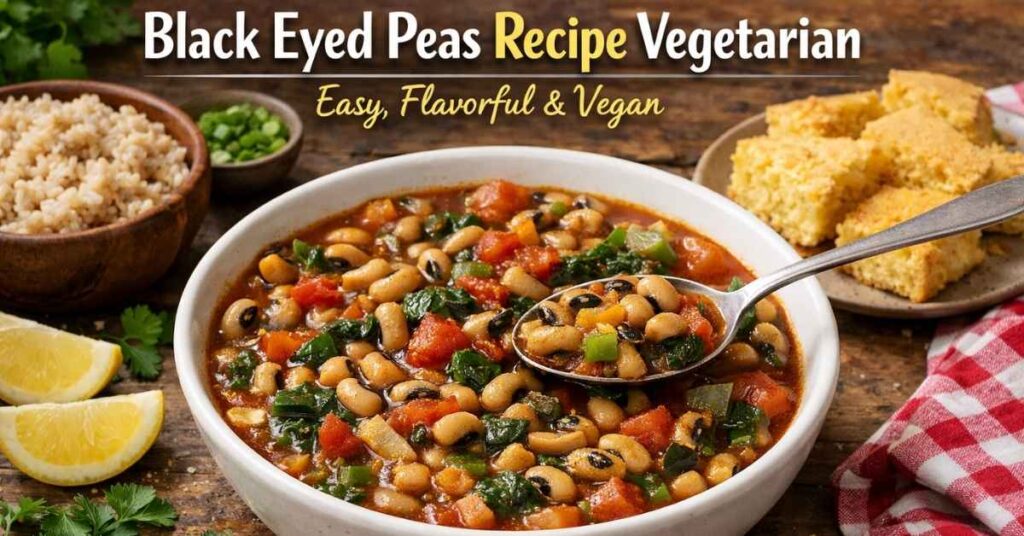
Black eyed peas recipe vegetarian is one of those timeless dishes that proves you don’t need meat to create deep, satisfying, and comforting flavors. Whether you’re craving a southern-style vegetarian black-eyed peas recipe, a vegan soul food classic, or a simple plant-based meal packed with protein and fiber, this guide covers everything you need — step by step, method by method.
This article combines traditional southern techniques, modern vegetarian cooking methods, and global flavor inspirations, all while staying easy to follow and friendly for home cooks. You’ll learn how to cook black-eyed peas without meat, how to make them smoky and rich, and how to adapt them for stovetop, slow cooker, or Instant Pot — all in one place.
Why This Vegetarian Black Eyed Peas Recipe Works
This vegetarian black-eyed peas recipe is designed to be practical, flexible, and deeply flavorful. Unlike many recipes that rely on ham or bacon, this version builds taste using aromatics, spices, and smart cooking techniques.
Here’s why readers consistently love this dish:
It’s 100% vegetarian and easily adaptable into a vegan black-eyed peas recipe.
It works equally well with dried or canned black-eyed peas.
It includes stovetop, slow cooker, and Instant Pot instructions in one guide.
It’s naturally gluten-free, budget-friendly, and meal-prep friendly.
It fits perfectly into New Year’s Day traditions or everyday healthy eating.
Most importantly, it tastes like classic southern comfort food, just without the meat.
Ingredients for Vegetarian Black Eyed Peas
The ingredient list is intentionally simple, but every item plays a specific role in building flavor.
Main Ingredients
Black-eyed peas form the foundation. You can use dried black-eyed peas for maximum flavor or canned black-eyed peas for convenience.
Onion and garlic create a savory base.
Olive oil helps bloom spices and aromatics.
Vegetable broth adds depth that water alone can’t provide.
Flavor-Boosting Ingredients (Southern Inspired)
Smoked paprika gives the peas their signature smoky taste without meal
Bay leaves add subtle earthiness.
Dried thyme provides warmth and balance.
Black pepper enhances overall flavor.
Liquid smoke is optional but highly effective for smoky vegetarian black-eyed peas.
Optional Add-Ins and Variations
Leafy greens like collard greens, kale, or spinach turn this into a hearty one-pot meal.
Jalapeños or chili flakes add gentle heat.
Diced tomatoes introduce acidity and richness.
A splash of coconut milk transforms it into a creamy fusion dish.
How to Cook Black Eyed Peas (Vegetarian Method Explained)
Cooking black-eyed peas vegetarian-style is all about understanding your beans and choosing the right method.
Using Dried Black-Eyed Peas: Soak vs No-Soak
Soaking dried black-eyed peas overnight reduces cooking time and creates a more even texture. However, no-soak black-eyed peas work perfectly when you’re short on time, especially in the Instant Pot.
Soaked peas cook faster and absorb seasoning more evenly.
Unsoaked peas take longer but develop a heartier texture.
Using Canned Black-Eyed Peas
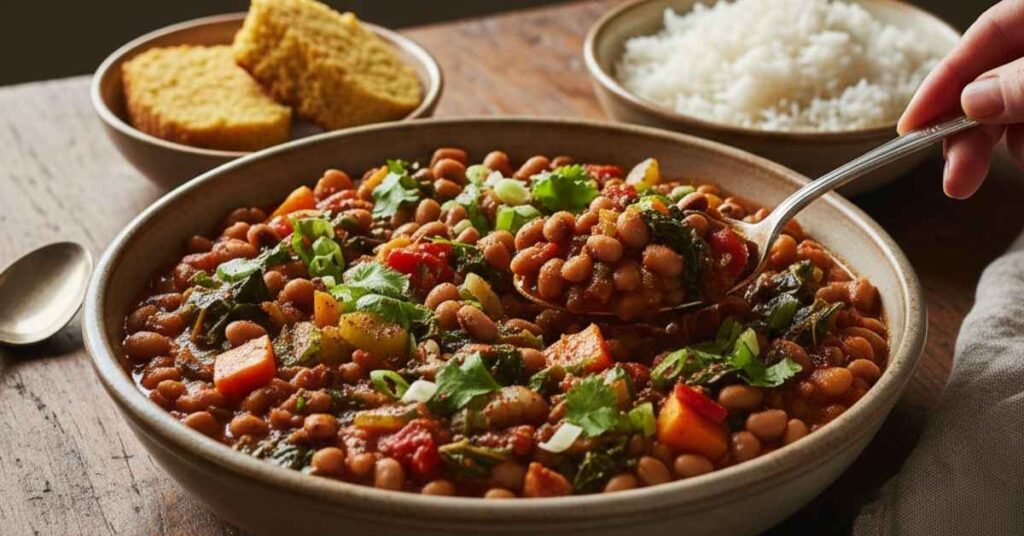
Canned black-eyed peas are already cooked, making them ideal for quick meals. Rinse them well to remove excess sodium, then simmer briefly in vegetable broth with aromatics and spices to infuse flavor.
Cooking Methods: Choose What Works for You
This vegetarian black-eyed peas recipe is designed to work across multiple cooking styles.
Stovetop Vegetarian Black Eyed Peas
Stovetop cooking offers full control and is ideal for traditional southern-style black-eyed peas.
Dried peas typically take 45–60 minutes to become tender.
Canned peas need only 20–25 minutes of gentle simmering.
Always add salt near the end to avoid tough skins.
Instant Pot Vegan Black Eyed Peas (No-Soak Option)
The Instant Pot black-eyed peas vegetarian method is perfect for busy schedules.
No soaking required.
Cook dried peas under pressure for about 20–25 minutes.
Natural pressure release improves texture.
This method is especially popular for vegan Instant Pot black-eyed peas because it produces creamy beans with minimal effort.
Slow Cooker / Crock Pot Black Eyed Peas
Slow cooking develops the deepest flavor.
Cook on low for 6–8 hours or high for 3–4 hours.
Perfect for slow cooked vegetarian black-eyed peas served as a main dish or side.
How to Make Black Eyed Peas Taste Smoky Without Meat
One of the biggest questions people ask is how to replace the smoky depth traditionally provided by ham.
The answer lies in layering flavors.
Smoked paprika provides authentic southern smokiness.
Liquid smoke mimics wood-smoked flavor when used sparingly.
Bay leaves and thyme add complexity.
Sautéing onions and garlic before adding liquid enhances richness.
Using vegetable broth instead of water dramatically improves taste.
These techniques are the backbone of any successful southern vegetarian black-eyed peas recipe.
Vegetarian Black Eyed Peas Variations
This dish adapts beautifully to different tastes and cuisines.
Southern-Style Vegetarian Black Eyed Peas
This classic version focuses on onions, garlic, smoked paprika, and thyme. It pairs perfectly with rice and cornbread.
Vegan Soul Food Black Eyed Peas
Richer and bolder, this version uses liquid smoke, greens, and slow simmering to create deep comfort-food flavor.
Black Eyed Peas with Greens
Adding collard greens or kale boosts nutrition and turns this into a complete one-pot vegetarian meal.
Spicy Black Eyed Peas
Cajun seasoning, cayenne, or chili flakes bring heat without overpowering the dish.
Global and Fusion Variations
Mediterranean versions include tomatoes, olive oil, and herbs.
Caribbean-inspired versions add coconut milk and spices.
African-style vegetarian black-eyed peas feature warm spices and aromatics.
What to Serve with Vegetarian Black Eyed Peas
Black-eyed peas are incredibly versatile.
They pair naturally with rice, especially long-grain or brown rice.
Cornbread, including vegan cornbread, completes a southern plate.
Roasted vegetables add contrast and texture.
They work beautifully as a filling for grain bowls or wraps.
READ MORE>>>How to Make a Tender Steak at Home (Juicy & Perfect Every Time)
Nutritional Benefits of Black Eyed Peas (Vegetarian Diet)
Black-eyed peas are a nutritional powerhouse, especially for plant-based eaters.
| Nutrient | Benefit |
|---|---|
| Plant-Based Protein | Supports muscle and satiety |
| Dietary Fiber | Aids digestion and heart health |
| Folate | Essential for cell function |
| Iron | Important for vegetarians |
| Potassium | Supports blood pressure |
This makes vegetarian black-eyed peas ideal for vegan, gluten-free, and heart-healthy diets.
Black Eyed Peas and New Year’s Day Tradition
In many southern cultures, eating black-eyed peas on New Year’s Day symbolizes good luck and prosperity.
Traditionally, they’re served with greens (representing wealth) and cornbread (symbolizing gold). This vegetarian version preserves the tradition while aligning with modern plant-based lifestyles.
Storage, Freezing, and Meal Prep Tips
Vegetarian black-eyed peas store exceptionally well.
Refrigerate in an airtight container for up to five days.
Freeze for up to three months without loss of texture.
Reheat gently on the stovetop with a splash of broth.
They’re ideal for meal prep vegetarian beans and batch cooking.
Common Mistakes to Avoid
Adding salt too early can toughen beans.
Skipping aromatics results in bland peas.
Overusing liquid smoke can overpower flavors.
Using water instead of broth reduces depth.
Not tasting before serving misses seasoning balance.
Avoiding these mistakes ensures consistently delicious results.
Frequently Asked Questions
Are black-eyed peas vegetarian?
Yes. Black-eyed peas are naturally vegetarian and vegan unless cooked with meat.
Do I need to soak black-eyed peas?
Soaking helps but isn’t required, especially when using an Instant Pot.
How long do black-eyed peas take to cook?
Stovetop: 45–60 minutes.
Instant Pot: 20–25 minutes.
Slow cooker: 6–8 hours on low.
Can I make this oil-free?
Yes. Use vegetable broth for sautéing aromatics.
Final Thoughts
This black eyed peas recipe vegetarian proves that you don’t need meat to create bold, comforting, and deeply satisfying food. With multiple cooking methods, rich southern flavors, and endless variations, this recipe adapts to every kitchen and lifestyle.
Whether you’re cooking for New Year’s Day, meal prepping for the week, or simply craving a nourishing plant-based dish, these vegetarian black-eyed peas deliver flavor, tradition, and nutrition in every bite.
“Good food doesn’t need to be complicated — it just needs intention.”
Try it once, and it will quickly become a staple in your vegetarian and vegan recipe rotation.