
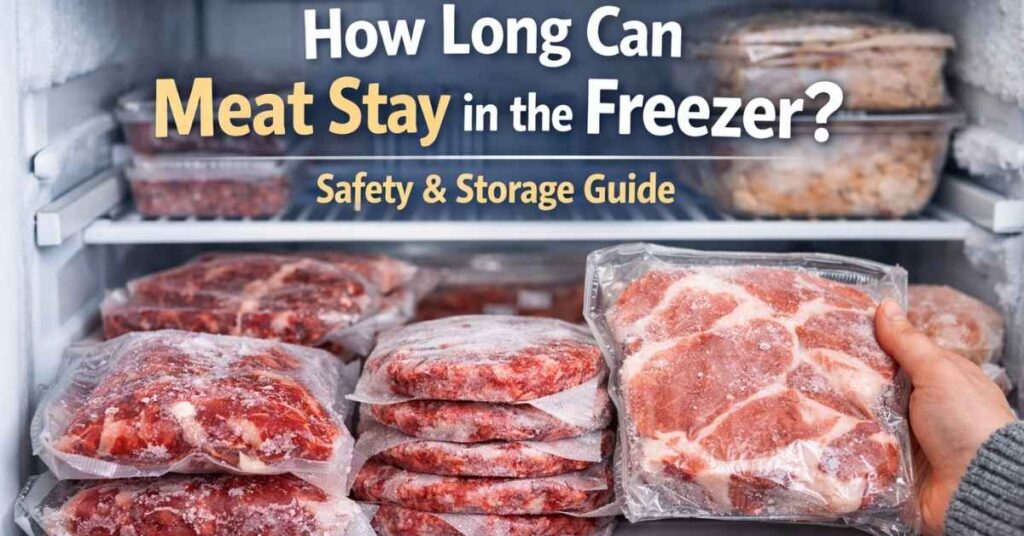
How long can meat stay in the freezer is one of the most common food safety questions for home cooks, meal preppers, and families trying to reduce waste. The short answer is that meat can stay frozen for a very long time safely, but its quality, taste, and texture gradually decline. Understanding the difference between food safety and food quality is the key to storing meat correctly and confidently.
This in-depth guide brings together food safety science, real-world kitchen practices, and expert recommendations to help you store meat properly, avoid freezer burn, and know exactly when frozen meat is still worth cooking.
How Long Can Meat Stay Frozen Safely?
At a constant temperature of 0°F (–18°C) or lower, meat remains safe to eat indefinitely. Freezing stops bacterial growth, which means harmful microorganisms cannot multiply. However, freezing does not kill bacteria, and it does not prevent quality loss.
For best quality, most meats should be used within 3 to 12 months, depending on the type, cut, and packaging method. After that point, meat may become dry, discolored, or bland, even though it may still be safe.
Important takeaway:
- Safety depends on temperature control
- Quality depends on time, packaging, and freezer stability
What Freezing Does (and Doesn’t Do) to Meat
Freezing is one of the most effective food preservation methods ever developed, but it is often misunderstood.
Does Freezing Kill Bacteria in Meat?
No. Freezing does not kill bacteria such as Salmonella or E. coli. Instead, it puts them into a dormant state. Once meat is thawed, bacteria can become active again if conditions allow.
According to food safety experts, freezing simply pauses bacterial growth, which is why frozen meat remains safe for long periods when kept consistently cold.
“Freezing food makes bacteria inactive but does not destroy them.” — Food safety guidance
Safety vs Quality: Why This Distinction Matters
Many people throw away frozen meat because they believe it has “gone bad.” In reality, they are often seeing quality deterioration, not spoilage.
Safety concerns relate to bacteria and toxins. Quality concerns relate to:
- Texture becoming tough or mushy
- Flavor becoming dull or “freezer-tasting”
- Moisture loss from freezer burn
Understanding this distinction helps reduce food waste while keeping meals safe.
Recommended Freezer Storage Times for Meat (By Type)
The following storage times are quality-based guidelines, not safety limits. These recommendations assume proper packaging and a freezer temperature of 0°F (–18°C) or lower.
Freezer Storage Times Table
| Meat Type | Best Quality Freezer Time |
| Beef steaks & roasts | 6–12 months |
| Ground beef | 3–4 months |
| Pork chops & roasts | 4–12 months |
| Bacon & sausage | 1–2 months |
| Whole chicken or turkey | Up to 12 months |
| Chicken parts | 9 months |
| Ground poultry | 3–4 months |
| Lean fish (cod, tilapia) | 6–8 months |
| Fatty fish (salmon) | 2–3 months |
| Cooked meat | 2–3 months |
These meat freezer storage times are designed to preserve taste and texture, not just safety.
How Freezer Temperature Affects Meat Shelf Life
Temperature stability is one of the most overlooked factors in frozen meat storage.
Why 0°F (–18°C) Is the Ideal Freezer Temperature
At 0°F, microbial activity stops, and chemical reactions that cause spoilage slow dramatically. Warmer temperatures allow ice crystals to melt and refreeze, damaging muscle fibers and increasing moisture loss.
A freezer set even a few degrees warmer can significantly shorten the freezer shelf life of meat.
Chest Freezer vs Upright Freezer
Chest freezers maintain temperature more consistently because cold air does not escape when opened. This makes them better for long-term meat storage, bulk buying, and hunting harvests.
Upright freezers are more convenient but experience more temperature fluctuations, which can reduce quality over time.
Best Way to Freeze Meat for Maximum Shelf Life
How you freeze meat matters just as much as how long you freeze it.
Packaging Methods That Extend Freezer Life
The best packaging methods reduce air exposure and moisture loss:
- Vacuum sealing provides the longest freezer life
- Heavy-duty freezer bags with air removed work well
- Butcher paper combined with plastic wrap offers solid protection
Poor packaging is the main cause of freezer burn, not time alone.
How to Prevent Freezer Burn
Freezer burn happens when moisture escapes from the meat’s surface and forms ice crystals. While freezer-burned meat is safe to eat, it often becomes dry and tough.
To prevent it:
- Remove as much air as possible
- Use moisture-resistant wrapping
- Avoid temperature fluctuations
Labeling, Dating, and Portioning Meat
Labeling frozen meat with the cut and freeze date helps prevent forgotten food and unnecessary waste. Portioning meat before freezing allows faster thawing and reduces repeated thaw-refreeze cycles.
Can Frozen Meat Go Bad? Signs to Watch For
Frozen meat rarely becomes unsafe, but it can lose quality to the point where it is no longer enjoyable.
Visual and Texture Changes
Common signs of quality loss include:
- Gray or pale discoloration
- Dry, leathery surfaces
- Large ice crystals inside packaging
These signs usually indicate freezer burn, not spoilage.
Smell and Taste Considerations
Frozen meat should not smell strongly while frozen. After thawing, a mild “cold” smell is normal, but sour or rancid odors mean the meat should be discarded.
How Long Can Meat Stay Frozen Past the “Best By” Date?
Expiration dates apply to refrigerated storage, not frozen food. If meat was frozen before the best-by date, it can remain safe for months afterward.
Freezing meat close to its expiration date does not improve its freshness but does prevent further spoilage.
Key rule: Freeze meat while it is still fresh, not after it has already begun to deteriorate.
Safe Ways to Thaw Frozen Meat
Thawing is where many food safety mistakes happen.
Refrigerator Thawing (Best Method)
Thawing meat in the refrigerator keeps it at a safe temperature throughout the process. This method preserves quality and allows meat to be refrozen if needed.
Cold Water Thawing
Cold water thawing is faster but requires sealed packaging and water changes every 30 minutes. Meat thawed this way should be cooked immediately.
Microwave Thawing
Microwave thawing is safe only if the meat is cooked right away. Partial cooking during defrosting can allow bacteria to grow.
Can You Refreeze Meat After Thawing?
Yes, refreezing meat is safe if it was thawed in the refrigerator and still looks and smells acceptable. However, quality may suffer due to moisture loss.
Meat thawed on the counter or in warm water should never be refrozen.
Special Scenarios Most Guides Ignore
Power Outages and Frozen Meat Safety
If the freezer stays closed, frozen meat can remain safe for:
- 48 hours in a full freezer
- 24 hours in a half-full freezer
If ice crystals are still present, the meat can be refrozen safely.
How Long Does Vacuum-Sealed Meat Last in the Freezer?
Vacuum sealing significantly extends freezer life by eliminating oxygen. Beef and pork can often maintain quality for up to 2–3 years when vacuum sealed and kept at stable temperatures.
Does Frozen Meat Lose Nutritional Value?
Protein, fat, and minerals remain stable during freezing. Some vitamins may degrade slightly over time, but frozen meat remains nutritionally valuable even after extended storage.
Rad more>>>Neuro Gum Net Worth 2026: Valuation, Revenue & Shark Tank
Freezer Storage Mistakes That Shorten Meat Shelf Life
The most common mistakes include:
- Overloading the freezer
- Using thin or damaged packaging
- Repeated temperature fluctuations
- Thawing and refreezing multiple times
Avoiding these mistakes preserves both safety and flavor.
Refrigerator vs Freezer: When Should You Freeze Meat?
Refrigeration is best for short-term storage, while freezing is ideal for long-term preservation.
Refrigerator Storage Guidelines
- Raw poultry: 1–2 days
- Raw beef and pork: 3–5 days
- Cooked meat: 3–4 days
When Freezing Is the Better Choice
- Buying meat in bulk
- Meal prepping
- Preventing waste before expiration
Frequently Asked Questions About Freezing Meat
How long can meat stay frozen and still be safe?
As long as it remains frozen at 0°F, it stays safe indefinitely.
Is 2-year-old frozen meat safe to eat?
Yes, if frozen continuously, though quality may be reduced.
Does freezer burn make meat unsafe?
No. Freezer burn affects quality, not safety.
Can you freeze meat in store packaging?
Yes, for short periods, but repackaging improves long-term quality.
Final Verdict: How Long Can Meat Stay in the Freezer?
How long can meat stay in the freezer ultimately depends on your definition of “good.” From a food safety perspective, properly frozen meat can last indefinitely. From a quality perspective, most meats taste best when used within a year.
By maintaining a stable freezer temperature, using proper packaging, and following safe thawing practices, you can confidently store meat, reduce waste, and enjoy better meals every time.
Remember: Frozen meat doesn’t go bad easily it simply changes. Knowing how and when to use it makes all the difference.