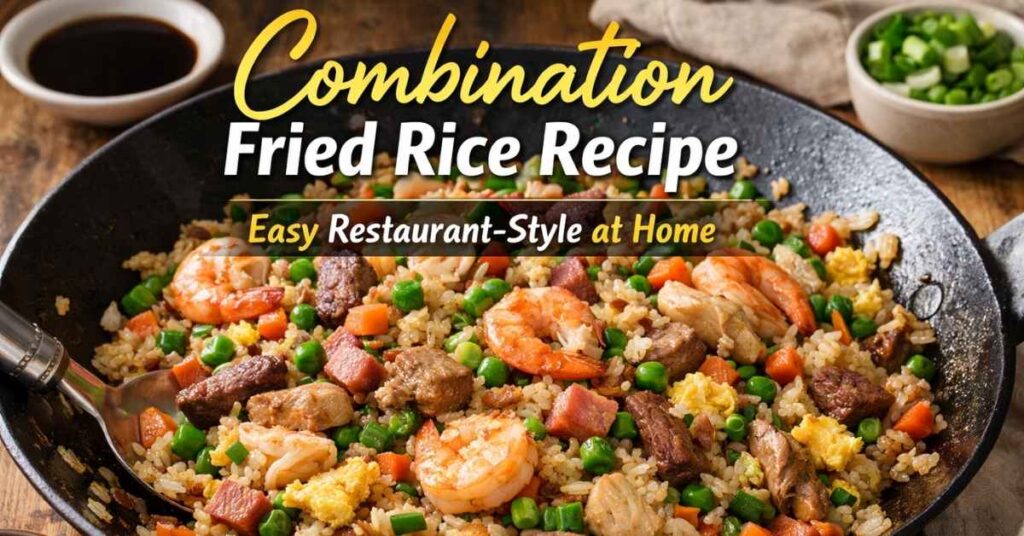
Combination fried rice is one of those comfort foods that feels familiar, satisfying, and endlessly customizable. It’s the dish people order when they want “a bit of everything” — tender chicken, juicy shrimp, savory beef or pork, fluffy rice, crisp vegetables, and that unmistakable restaurant-style flavor. This guide is designed to be the most complete, SEO-optimized, and human-written resource on combination fried rice, combining everything your competitors covered plus what they missed.
You’ll learn what combination fried rice really is, how to make it step by step, why restaurants get it right, how to avoid common mistakes, nutrition facts, variations, storage tips, and expert techniques that elevate your fried rice from average to unforgettable.
What Is Combination Fried Rice?
Combination fried rice is a classic Chinese-American fried rice dish made with multiple proteins, vegetables, eggs, and rice stir-fried together over high heat. The word “combination” refers to the mix of proteins, usually chicken, shrimp, beef, pork, or ham, combined in one dish.
Unlike plain egg fried rice or single-protein versions, combination fried rice delivers layers of flavor and texture in every bite. It is inspired by traditional Chinese dishes like Yangzhou fried rice, which also uses mixed meats and seafood, but it has evolved into a staple of American Chinese takeout menus.
Key characteristics of combination fried rice
| Feature | Description |
| Rice | Long-grain or jasmine rice, preferably day-old |
| Proteins | Chicken, shrimp, beef, pork, or a mix |
| Vegetables | Peas, carrots, onions, scallions |
| Flavor base | Soy sauce, sesame oil, aromatics |
| Cooking method | High-heat stir-fry |
This balance is exactly why combination fried rice recipe searches are so popular — it’s filling, flexible, and fast.
Why Combination Fried Rice Is So Popular
Combination fried rice checks every box for home cooks and restaurant diners alike.
Reasons it remains a favorite:
- Uses leftover rice, reducing waste
- Easy to customize with available ingredients
- High in protein and energy
- Ready in under 30 minutes
- Works for lunch, dinner, or meal prep
From busy families to late-night takeout lovers, homemade fried rice has become a global comfort food.
Ingredients for Combination Fried Rice
The secret to the best fried rice recipe isn’t fancy ingredients — it’s balance and preparation.
Best Rice for Fried Rice
Rice choice matters more than most people realize.
Recommended options:
- Jasmine rice (most common for restaurant-style fried rice)
- Long-grain white rice
- Brown rice for a healthier fried rice variation
Why day-old rice matters:
Fresh rice contains moisture that leads to soggy results. Cold, cooked rice dries slightly, allowing grains to fry instead of steam.
Protein Options (The “Combination”)
Most restaurants use at least two or three proteins.
Popular protein combinations:
- Chicken + shrimp
- Beef + chicken
- Pork + shrimp
- Ham or sausage for extra savory depth
Cut proteins into small, uniform pieces so they cook evenly and blend naturally with the rice.
Vegetables That Work Best
Vegetables add sweetness, color, and crunch.
Common choices include peas, carrots, onions, green onions, bell peppers, and sometimes corn or bean sprouts. Frozen vegetable mixes are perfectly acceptable and save time.
Sauces and Seasonings
Flavor comes from restraint, not overload.
| Ingredient | Purpose |
| Soy sauce | Salty, umami backbone |
| Oyster sauce | Depth and richness |
| Sesame oil | Aroma and finishing flavor |
| Garlic & ginger | Aromatic base |
| White pepper | Subtle heat |
Too much sauce is a common fried rice mistake, masking the natural flavors.
How to Make Combination Fried Rice (Step-by-Step)
This method mirrors how restaurants achieve that unmistakable texture and taste.
Step 1: Prepare Everything First
Combination fried rice cooks fast. Have all ingredients chopped, measured, and ready. This technique, known as mise en place, prevents overcooking.
Step 2: Cook Proteins Separately
This step is often skipped — and that’s a mistake.
Cooking proteins separately ensures proper browning and prevents overcrowding. Lightly season each protein, stir-fry until just cooked, then remove from the pan.
Step 3: Scramble the Eggs
Add oil, scramble eggs quickly, and remove. This keeps them fluffy instead of rubbery.
Step 4: Stir-Fry Vegetables and Aromatics
Sauté onions, garlic, and ginger until fragrant. Add vegetables and cook until tender-crisp.
Step 5: Add Rice and High Heat
Increase heat to high. Add rice and spread it out. Let it sit briefly to develop light browning before stirring.
This step is crucial for restaurant-style fried rice texture.
Step 6: Combine and Season
Return proteins and eggs to the pan. Add soy sauce, oyster sauce, and sesame oil. Toss until evenly coated.
Finish with scallions and a final taste adjustment.
Chef’s Tip: “Great fried rice should smell toasted, not saucy.”
Pro Tips for Perfect Combination Fried Rice
Small details make a big difference.
Common Fried Rice Mistakes to Avoid
- Using freshly cooked rice
- Overcrowding the pan
- Adding sauce too early
- Cooking everything at once
How Restaurants Get Better Flavor
Restaurants rely on high heat, proper oil selection, and sometimes a touch of butter at the end for richness. This creates a subtle wok hei effect — a smoky aroma associated with authentic fried rice.
Combination Fried Rice Variations
One of the biggest SEO gaps competitors missed is variations.
Spicy
Add chili oil, sriracha, or sambal oelek for heat.
Healthy
- Use brown rice
- Add more vegetables
- Reduce oil and sodium
Vegetarian or Vegan Fried Rice
Replace meat with tofu, mushrooms, or edamame. Use plant-based sauces.
Sheet-Pan or Oven-Baked Fried Rice
An emerging trend for easy weeknight meals, especially for large batches.
Read MORE>>>Smoked Jalapeno Poppers Recipe: Easy, Bacon Wrapped Appetizer
Nutrition Information & Health Considerations
Combination fried rice can be balanced when prepared thoughtfully.
Average Nutrition (Per Serving)
| Nutrient | Approximate Value |
| Calories | 450–550 |
| Protein | 25–30g |
| Carbohydrates | 45–55g |
| Fat | 15–20g |
How to Make Fried Rice Healthier
- Increase vegetable ratio
- Use lean proteins
- Limit added oils
- Control portion size
What to Serve with Combination Fried Rice
Pairing enhances the meal.
Popular side dishes include egg rolls, dumplings, hot and sour soup, sweet and sour chicken, or steamed vegetables.
Storage, Reheating, and Meal Prep
Another topic most competitors barely cover.
Storage Tips
Store fried rice in an airtight container and refrigerate within two hours.
Reheating Methods
- Stovetop: Best for texture
- Microwave: Add a splash of water and cover
Can You Freeze Fried Rice?
Yes, but texture is best within one month.
Frequently Asked Questions
Can I use fresh rice for fried rice?
Yes, but day-old rice produces better results.
What oil is best for fried rice?
Neutral oils like peanut or vegetable oil work best.
Is combination fried rice healthy?
It can be when balanced with vegetables and lean protein.
Why does restaurant fried rice taste better?
High heat, proper technique, and ingredients.
Final Thoughts
Combination fried rice remains a timeless favorite because it’s flexible, flavorful, and satisfying. Whether you’re recreating takeout at home, using leftovers creatively, or experimenting with healthier variations, this dish adapts to your lifestyle.
By following the techniques in this guide — proper rice, high heat, balanced seasoning, and smart preparation — you can consistently make restaurant-quality combination fried rice at home.
Once you master the base, the possibilities are endless.