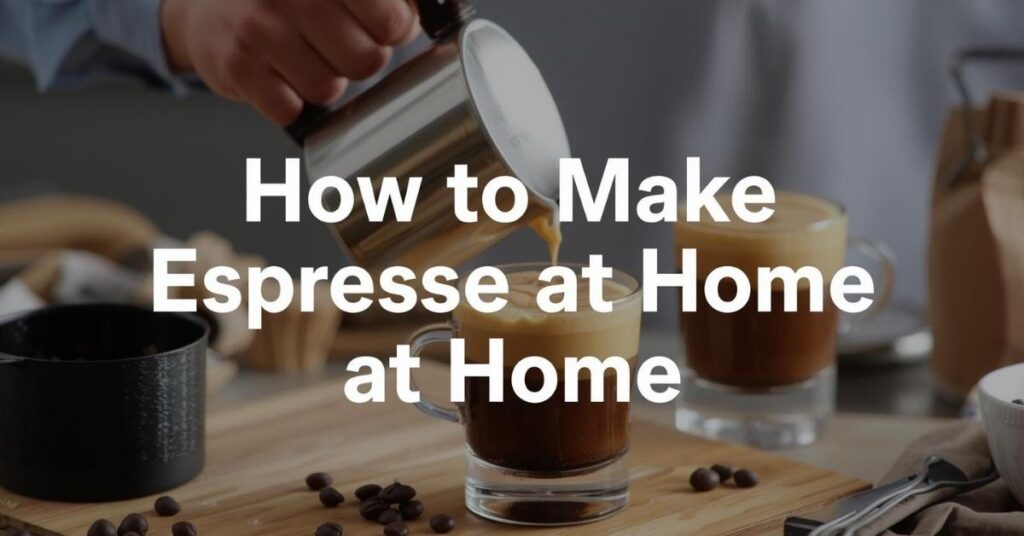
How to make espresso is one of the most searched coffee questions in the world — and for good reason. Espresso sits at the heart of café culture, yet it often feels intimidating to make at home. Many people assume you need an expensive machine, years of practice, or barista-level skills. The truth is far more encouraging. With the right understanding, good technique, and realistic expectations, you can make excellent espresso at home, even without a machine.
This guide is designed to be practical, honest, and easy to follow. Whether you want to learn how to make espresso at home, experiment with alternatives like how to make espresso in a French press, or understand how to make espresso powder, this article covers everything step by step. By the end, you’ll know what espresso really is, how it works, and how to make it taste great using the tools you already have.
What Is Espresso? (And What It Is Not)
Espresso is not just strong coffee. It is a specific brewing method where hot water is forced through finely ground coffee under pressure, producing a small, concentrated drink with intense flavor and a layer of crema on top.
A true espresso has:
- High pressure (around 9 bars)
- Fine coffee grind
- Short brew time (about 25–30 seconds)
- Concentrated flavor and body
Many people confuse espresso with dark roast coffee or very strong drip coffee. While those drinks may be bold, they are not espresso. Espresso’s defining feature is pressure, not just strength.
Espresso vs Regular Coffee
| Feature | Espresso | Drip Coffee |
| Brew Time | 25–30 seconds | 3–5 minutes |
| Grind Size | Fine | Medium |
| Pressure | High (9 bars) | None |
| Volume | Small (30–60 ml) | Large |
| Flavor | Intense, concentrated | Milder |
Understanding this difference helps set realistic expectations, especially when learning how to make espresso without a machine.
What You Need to Make Espresso at Home
To make real espresso, you need five basic elements working together:
- Pressure
- Heat
- Fine grind
- Fresh coffee
- Proper timing
When one of these is missing, you can still make espresso-style coffee, but not true espresso.
Essential Equipment for Espresso
- Espresso machine
- Burr coffee grinder
- Portafilter and basket
- Tamper
- Fresh coffee beans
- Filtered water
If you don’t have these, don’t worry. Later in this guide, you’ll learn how to make espresso without a machine, including stovetop, AeroPress, and French press methods.
Coffee Beans for Espresso: What Actually Matters
Beans matter more than most beginners realize. Even perfect technique can’t save stale or poor-quality coffee.
Best Roast Level for Espresso
- Medium to medium-dark roasts are most common
- Dark roasts produce more bitterness and heavier body
- Light roasts require more precision and often taste sour for beginners
Freshness Is Critical
Espresso highlights flaws. Beans older than 3–4 weeks from roast date lose aroma, crema, and sweetness.
Important: Grinding fresh beans just before brewing improves espresso more than upgrading equipment.
Espresso Grind Size Explained Simply
Espresso grind should feel like fine sand or powdered sugar between your fingers. Too coarse and water flows too fast. Too fine and it chokes the machine.
How Grind Size Affects Taste
- Too coarse → sour, weak espresso
- Too fine → bitter, harsh espresso
This is why grind size is the most important variable when learning how to make espresso at home.
Espresso Ratios, Dose, and Brew Time
Espresso follows simple math.
Standard Espresso Ratio
Most modern espresso uses a 1:2 ratio.
| Coffee Dose | Espresso Yield |
| 18g coffee | 36g espresso |
| 20g coffee | 40g espresso |
Brew Time
- Ideal extraction: 25–30 seconds
- Faster = under-extracted (sour)
- Slower = over-extracted (bitter)
These numbers are guidelines, not rigid rules. Taste always wins.
Step-by-Step: How to Make Espresso With a Machine
This is the classic method for making true espresso.
Step 1: Preheat Everything
Warm your machine, portafilter, and cup. Temperature stability improves flavor.
Step 2: Grind Fresh Coffee
Grind your beans fine and evenly. Consistency matters more than speed.
Step 3: Dose and Distribute
Measure your coffee dose and level it evenly in the basket.
Step 4: Tamp Firmly
Apply steady, even pressure. Don’t overthink strength — consistency is key.
Step 5: Pull the Shot
Start the shot and watch the flow. Espresso should pour slowly, like warm honey.
Step 6: Taste and Adjust
Taste immediately. Adjust grind size before changing anything else.
How to Make Espresso Without a Machine
This is where most people begin — and where this guide really helps.
Can You Make Real Espresso Without a Machine?
No, not technically. But you can make espresso-style coffee that works well for lattes, americanos, and iced drinks.
How to Make Espresso on the Stove (Moka Pot Method)
The moka pot is the closest alternative to espresso.
Why It Works
It uses steam pressure to force water through fine coffee, creating a strong, concentrated brew.
How to Use a Moka Pot
- Fill bottom chamber with hot water
- Add finely ground coffee (not packed)
- Assemble and place on low heat
- Remove when brewing finishes
This method is excellent for anyone learning how to make espresso without machine at home.
How to Make Espresso With AeroPress
AeroPress creates pressure manually and produces clean, intense coffee.
Espresso-Style AeroPress Recipe
- Fine grind coffee
- Small water volume
- Short steep time
- Firm press
The result isn’t true espresso, but it’s smooth, strong, and highly drinkable.
How to Make Espresso in a French Press
Many people search how to make espresso in a French press, but it’s important to be honest.
French press cannot produce espresso due to lack of pressure. However, it can make a strong concentrate.
Best Way to Approximate Espresso
- Use more coffee
- Use less water
- Brew slightly shorter
This works well for milk drinks, but flavor will be different.
How to Make Espresso Powder at Home
Espresso powder is not espresso grounds. It’s brewed espresso that has been dried and finely ground.
Simple Method
- Brew strong espresso or espresso-style coffee
- Dehydrate it completely
- Grind into fine powder
Espresso powder is commonly used in baking to enhance chocolate flavor, not for drinking.
Common Espresso Taste Problems (And Fixes)
Why Espresso Tastes Bitter
- Grind too fine
- Brew too long
- Water too hot
Why Espresso Tastes Sour
- Grind too coarse
- Brew too fast
- Under-extraction
Weak or Watery Espresso
- Low dose
- Old beans
- Poor pressure
Fix one variable at a time.
Crema Explained: What It Means (And What It Doesn’t)
Crema is the golden foam on top of espresso. It looks appealing but does not guarantee good flavor.
Crema depends heavily on:
- Freshness of beans
- Roast level
- Pressure
Some excellent espresso has minimal crema. Taste matters more.
Common Espresso Mistakes Beginners Make
- Using blade grinders
- Ignoring ratios
- Using stale beans
- Chasing crema only
- Changing too many variables at once
Avoiding these mistakes accelerates improvement dramatically.
READ MORE >>> How Long to Cook Chicken Breast in Crock Pot (Exact Times)
Espresso vs Popular Coffee Drinks
Espresso forms the base of many drinks.
| Drink | What It Is |
| Americano | Espresso + hot water |
| Latte | Espresso + steamed milk |
| Cappuccino | Espresso + milk foam |
| Flat White | Espresso + microfoam |
Understanding espresso helps every other coffee taste better.
Frequently Asked Questions About Making Espresso
Is espresso stronger than coffee?
By volume, yes. By caffeine per cup, usually not.
Can you make espresso at home easily?
Yes, with practice and realistic expectations.
Is moka pot espresso real espresso?
No, but it’s the closest alternative.
Can pre-ground coffee work?
Yes, but fresh grinding improves results significantly.
Final Thoughts: The Best Way to Make Espresso at Home
Learning how to make espresso is a journey, not a destination. Whether you’re using a full espresso machine or experimenting with how to make espresso without a machine, the goal is flavor, not perfection.
Start simple. Taste often. Adjust slowly. And most importantly, enjoy the process.
Great espresso isn’t about expensive gear — it’s about understanding coffee, respecting the process, and finding what tastes best to you.