
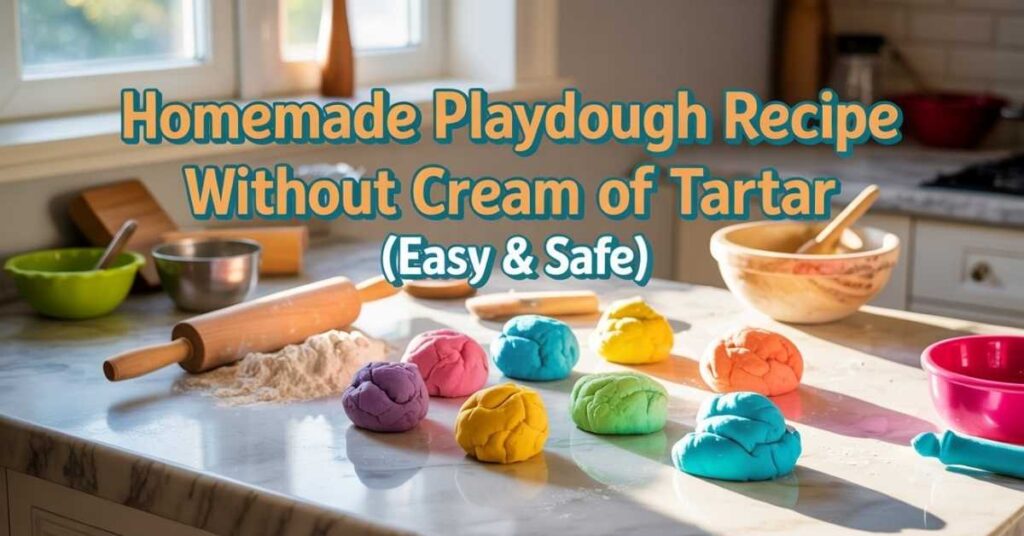
Homemade playdough recipe without cream of tartar — if that’s what you’re searching for, you’re in exactly the right place. Whether you’ve run out of cream of tartar, don’t want to buy it for a one-off activity, or prefer using simple pantry ingredients, this guide shows you how to make soft, squishy, non-toxic playdough that kids love — without compromising on texture or fun.
This article isn’t just another quick recipe. It’s a parent-tested, classroom-friendly, problem-solving guide that explains why this method works, how to fix common issues, and how to make your homemade playdough last longer. Everything is written in an easy-to-read, human tone, so you can skim when you need speed or slow down when you want understanding.
Why Most Playdough Recipes Use Cream of Tartar
Traditional playdough recipes often rely on cream of tartar because it acts as a stabilizer and preservative. It helps the dough stay elastic, smooth, and usable for longer periods. In cooked playdough recipes, cream of tartar also improves texture by preventing the dough from becoming grainy or stiff.
That said, cream of tartar is:
- Not always available
- Often expensive for occasional use
- Unnecessary for short-term or no-cook playdough
The important truth: you can make excellent homemade playdough without cream of tartar — especially for sensory play, toddlers, preschoolers, and classroom activities.
Is It Okay to Make Playdough Without Cream of Tartar?
Yes — absolutely. Playdough without cream of tartar works beautifully when you understand what changes and how to adapt.
Here’s what to expect:
| Feature | With Cream of Tartar | Without Cream of Tartar |
| Texture | Extra elastic | Soft & pliable |
| Shelf life | Longer (weeks) | Shorter (days–1 week) |
| Cost | Higher | Budget-friendly |
| Ingredients | Specialty item | Pantry staples |
For quick activities, weekend crafts, homeschool projects, or last-minute play ideas, playdough without cream of tartar is not just acceptable — it’s ideal.
Quick Recipe Overview (For Busy Parents)
Time needed: 10 minutes
Skill level: Beginner
Best for: Kids, toddlers (with supervision), classrooms, sensory play
Method: No-cook
This easy playdough recipe uses flour, salt, oil, and water to create a soft, smooth dough that’s easy to knead and fun to shape. It’s a perfect solution when you need playdough now and don’t want complicated ingredients.
The Best Homemade Playdough Recipe Without Cream of Tartar
This is the core recipe — simple, reliable, and flexible.
Ingredients
- 2 cups all-purpose flour
- ¾ cup salt
- 2 tablespoons vegetable oil (or coconut oil)
- ¾–1 cup warm water
- Food coloring (optional)
These are everyday pantry ingredients most households already have, making this recipe accessible and budget-friendly.
Step-by-Step Instructions
Start by combining the flour and salt in a large bowl. Stir them together so the salt is evenly distributed. This step is important for achieving a smooth, consistent dough texture.
Add the oil next. The oil gives the playdough flexibility and helps prevent stickiness. Slowly pour in warm water while mixing with a spoon or your hands. Begin with ¾ cup and add more only if the dough feels dry.
Once the dough starts to come together, knead it gently on a clean surface for two to three minutes. You’re aiming for a soft, pliable consistency — not sticky and not crumbly.
If using food coloring, add it during kneading and work it through until evenly distributed.
Tip: Warm water helps dissolve the salt and creates a smoother dough without cooking.
No-Cook vs Cooked Playdough: Which Is Better?
Many parents wonder whether cooked playdough is “better.” The answer depends on how you plan to use it.
| Feature | No-Cook Playdough | Cooked Playdough |
| Prep time | Very fast | Slower |
| Texture | Soft & squishy | Very elastic |
| Shelf life | Shorter | Longer |
| Best use | Quick play, toddlers | Long-term storage |
For most families and teachers, no-cook playdough without cream of tartar is more than enough — especially when stored correctly.
Best Substitutes for Cream of Tartar (When You Want Extra Elasticity)
If you want slightly improved elasticity or shelf life, a few simple substitutes can help — but they’re optional.
- Lemon juice or vinegar: Adds mild acidity that improves texture
- Baking powder: Contains acid and base, mimicking cream of tartar
- Cornstarch: Softens dough and reduces stickiness
These substitutes aren’t mandatory. Many people prefer skipping them altogether for a simpler, more natural playdough recipe.
How to Fix Common Playdough Problems (Troubleshooting Guide)
Even the best recipes need adjustment sometimes. Here’s how to fix the most common issues.
Sticky dough:
Add a small amount of flour and knead until the stickiness disappears.
Crumbly dough:
Work in a teaspoon of water or oil at a time until the dough becomes smooth.
Too dry:
Knead with slightly damp hands to reintroduce moisture evenly.
Too oily:
Dust lightly with flour and knead gently.
These fixes are what separate beginner recipes from parent-approved, classroom-safe playdough.
Is Homemade Playdough Safe for Kids and Toddlers?
Yes — when made with supervision, this non-toxic homemade playdough is safe for kids. The ingredients are food-grade, but it’s important to remember that playdough is not intended for eating.
Safety tips include:
- Adult supervision for toddlers
- Washing hands before and after play
- Avoiding play if a child has salt sensitivity
- Discarding dough if it smells unusual
This recipe is especially popular with parents seeking taste-safe alternatives for sensory play.
How Long Does Homemade Playdough Last Without Cream of Tartar?
One of the most overlooked questions — and one competitors rarely answer clearly.
Typical shelf life:
- Room temperature (airtight): 2–3 days
- Refrigerator (airtight): 5–7 days
Without cream of tartar, the dough won’t last weeks — but it lasts long enough for repeated play when stored correctly.
Storage Tips to Make Playdough Last Longer
Proper storage dramatically improves shelf life.
- Store in airtight containers or zip-lock bags
- Remove excess air before sealing
- Add a drop of oil before storing if dough feels dry
- Refrigerate for longer freshness
If the dough becomes stiff after storage, knead in a tiny bit of oil or warm water to revive it.
Fun Variations Kids Love
Once you’ve mastered the base recipe, variations add excitement without complexity.
Color variations:
Use natural food coloring or divide dough into portions for mixing colors.
Scented playdough:
A drop of vanilla, lemon, or lavender essential oil adds sensory appeal.
Gluten-free option:
Use a gluten-free flour blend or cornstarch-based dough for allergy-friendly play.
These small changes turn a simple recipe into a creative learning experience.
READ MORE >>> Traeger Fin and Feather Rub Recipe – Easy Homemade Copycat
Educational & Sensory Benefits of Playdough
Playdough isn’t just fun — it supports development.
- Builds fine motor skills
- Encourages creativity and imagination
- Supports sensory regulation
- Strengthens hand muscles for writing
- Promotes calm, focused play
Teachers and homeschoolers often use homemade playdough as part of hands-on learning and indoor activities for kids.
Frequently Asked Questions
Can I make playdough without cream of tartar and without cooking?
Yes. This no-cook recipe is designed specifically for that purpose.
What is the best substitute for cream of tartar in playdough?
Lemon juice or vinegar works well, but the recipe also works without substitutes.
Why is my playdough crumbly?
It usually needs more moisture. Add water or oil slowly while kneading.
Can I store homemade playdough overnight?
Yes, as long as it’s sealed in an airtight container.
Final Thoughts
Making a homemade playdough recipe without cream of tartar doesn’t mean settling for poor texture or short-lived fun. With the right balance of ingredients, proper storage, and a little troubleshooting knowledge, you can create soft, safe, affordable playdough anytime inspiration strikes.
This recipe proves that simple really is better — especially when it brings kids together for creative, hands-on play without stress or special ingredients.
Save it, reuse it, and enjoy the magic of homemade playdough — no cream of tartar required.