
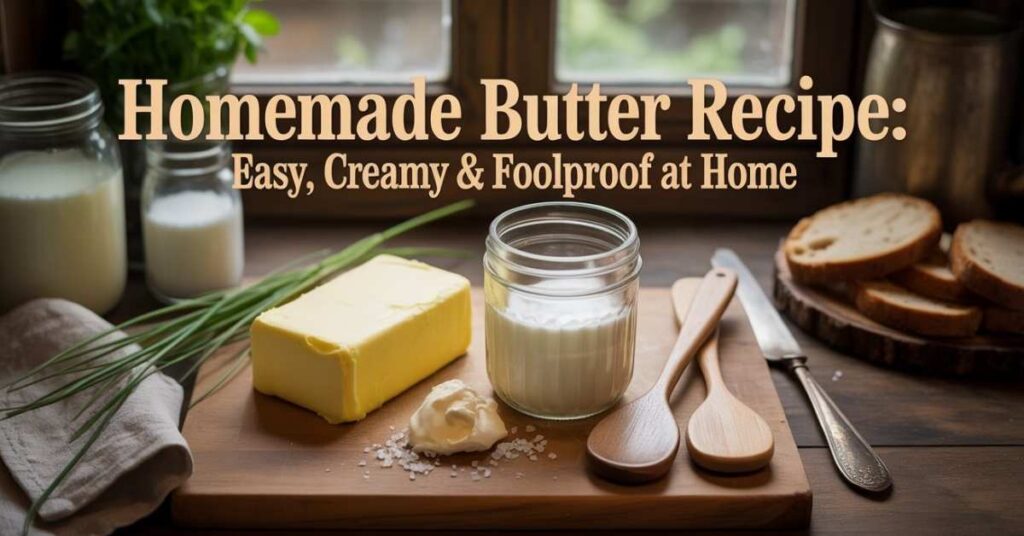
Homemade butter recipe — if there’s one kitchen project that instantly makes you feel connected to real food, this is it. Making butter at home is simple, satisfying, and surprisingly quick. With just one basic ingredient, you can turn fresh cream into rich, creamy butter that tastes better than most store-bought options.
This guide is designed to be complete, human, and practical. Whether you’re a beginner, making butter with kids, trying the jar method, or using a stand mixer, this article walks you through everything — step by step — while explaining why each stage matters. By the end, you’ll understand not only how to make butter, but how to make the best homemade butter recipe confidently every time.
What Is Homemade Butter?
Homemade butter is simply butter made by churning cream until the fat separates from the liquid. That liquid becomes buttermilk, and the solid fat becomes butter. Humans have been making butter this way for thousands of years, long before supermarkets or factory processing existed.
What makes homemade butter special is its freshness, texture, and flavor. Unlike commercial butter, which often contains stabilizers and is processed for shelf life, homemade butter is pure, clean, and customizable.
You control:
- The ingredients
- The salt level
- The texture
- The flavor
And most importantly, you know exactly what you’re eating.
Why Make Butter at Home?
People often assume butter-making is complicated. In reality, it’s one of the simplest homemade foods you can make.
Here’s why more people are turning to an easy homemade butter recipe:
| Benefit | Why It Matters |
| Ingredient control | No preservatives or additives |
| Fresh taste | Creamy, clean, and rich |
| Custom flavors | Salted, unsalted, sweet, or savory |
| Educational | Great for kids and beginners |
| Cost-effective | Especially when buying cream in bulk |
Many readers are surprised by how different homemade butter tastes. It’s softer, more aromatic, and spreads beautifully when fresh.
Ingredients Needed for Homemade Butter
The beauty of this recipe is its simplicity.
The Only Ingredient You Need
- Heavy cream (also called double cream or whipping cream)
That’s it.
Optional:
- Salt (fine sea salt works best)
Choosing the Best Cream
For the best homemade butter recipe, choose cream with:
- At least 35% fat
- Fresh smell
- No added thickeners if possible
Ultra-pasteurized cream works, but it may take slightly longer to churn.
Homemade Butter Recipe (Step-by-Step)
This is the core homemade butter recipe that works regardless of the method you choose.
Step 1: Whip the Cream
Pour cold cream into your mixing container. Start whipping. First, it becomes whipped cream. Keep going.
Step 2: Watch the Transformation
After a few minutes, the texture changes. The cream becomes grainy. This is when fat molecules begin clumping together.
Step 3: Butter and Buttermilk Separate
Suddenly, liquid separates from solid butter. This liquid is buttermilk.
Step 4: Rinse the Butter
Drain the buttermilk. Rinse the butter under cold water, gently kneading it until the water runs clear. This step is critical for shelf life.
Step 5: Salt (Optional)
Add salt if desired. Mix gently.
At this point, your homemade butter is ready.
How Long Does It Take to Make Homemade Butter?
Most people are surprised by how fast it is.
| Method | Time |
| Stand mixer | 5–8 minutes |
| Food processor | 3–5 minutes |
| Jar method | 10–15 minutes |
Temperature, fat content, and speed all affect timing, but in most cases, homemade butter in 10 minutes is completely realistic.
Different Ways to Make Homemade Butter
Homemade Butter Recipe Stand Mixer
This is the easiest and most reliable method. A stand mixer handles the work while you watch the transformation. Use a splash guard, as buttermilk can splatter.
Homemade Butter Recipe in a Jar
This is perfect for beginners and kids.
Add cream to a jar, seal it tightly, and shake. Kids love watching the cream turn solid. This makes it an excellent homemade butter recipe for kids and classrooms.
Food Processor Method
Fast and efficient. Ideal when making larger batches. Stop frequently to scrape sides.
Can You Make Butter by Hand?
Yes, but it takes patience. Historically, this was done with wooden churns or hand-whisking. Today, it’s more educational than practical.
Understanding the Butter-Making Process (Simple Science)
Butter forms because fat molecules separate from liquid when agitated. Cream is an emulsion of fat suspended in liquid. When you churn it, the fat molecules collide, stick together, and push the liquid out.
That liquid is buttermilk.
Rinsing removes leftover buttermilk, which prevents spoilage and improves texture.
This simple science explains why:
- Over-whipped cream becomes butter
- Cold water matters
- Fat content is essential
What Is Buttermilk and How to Use It?
Fresh buttermilk from butter-making is not the same as cultured buttermilk sold in stores. It’s mild, slightly sweet, and incredibly useful.
Use it in:
- Pancakes
- Baking
- Marinades
- Biscuits
Never throw it away — it’s a bonus ingredient.
Salted vs Unsalted Homemade Butter
Salted butter:
- Lasts longer
- Has stronger flavor
- Best for spreading
Unsalted butter:
- Better for baking
- Cleaner cream flavor
- Shorter shelf life
Most people start unsalted, then experiment.
Homemade Butter Variations
Once you master the base recipe, variations are endless.
Popular options include:
- Garlic butter
- Herb butter
- Honey butter
- Sweet cinnamon butter
These compound butters elevate simple meals instantly.
Common Homemade Butter Mistakes (And Fixes)
Mistakes are part of learning. Here’s how to fix the most common ones:
| Problem | Solution |
| Butter won’t form | Keep whipping; cream needs time |
| Greasy texture | Rinse longer in cold water |
| Grainy butter | Knead gently to smooth |
| Spoils quickly | Didn’t rinse fully |
Most issues come down to patience and rinsing.
How to Store Homemade Butter Properly
Homemade butter should be treated like fresh food.
- Refrigerate: 7–10 days
- Freeze: Up to 6 months
- Keep airtight
- Avoid light and heat
Freezing in small portions works best.
Is Homemade Butter Healthier Than Store-Bought?
Nutritionally, butter is butter. The difference lies in ingredients and freshness.
Homemade butter:
- Contains no preservatives
- Uses pure cream
- Has better flavor satisfaction (you often use less)
For many people, that makes it a better choice.
READ MORE >>> Homemade Egg Noodles Recipe – Easy, Old-Fashioned & Foolproof
Cost Comparison: Homemade vs Store Butter
| Option | Approximate Cost |
| 1 cup heavy cream | Moderate |
| Butter yield | ~½ cup |
| Store butter | Varies |
Homemade butter becomes cost-effective when cream is on sale or bought locally.
FAQs About Homemade Butter
Can kids help make butter?
Yes. The jar method is safe and fun, making it a perfect homemade butter recipe for kids.
Can I make butter from milk?
No. Milk doesn’t contain enough fat.
Why didn’t my cream turn into butter?
It likely needed more time or higher fat content.
Can I freeze homemade butter?
Absolutely.
Final Thoughts: The Best Homemade Butter Recipe
The best homemade butter recipe isn’t about fancy tools or rare ingredients. It’s about understanding a simple process and trusting it. Once you try it, you’ll realize how empowering it feels to make something so fundamental from scratch.
Whether you’re shaking a jar with your kids, using a stand mixer, or just experimenting in your kitchen, homemade butter connects you to food in a meaningful way.
Simple. Honest. Delicious.
And once you’ve made it once, you’ll never forget how easy it truly is.