
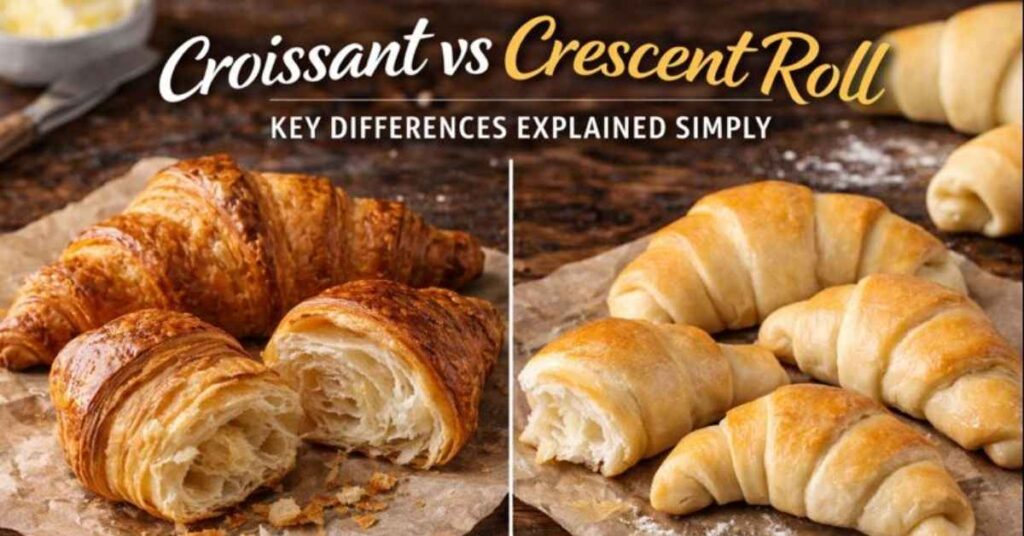
Croissant vs Crescent roll is one of the most searched pastry comparisons, and for good reason. At first glance, both look similar with their iconic crescent shape, golden crust, and buttery appeal. But once you bite into them—or try baking with them—the differences become impossible to ignore. This guide breaks everything down in a clear, simple, and human way, so you can confidently choose the right option for your kitchen, diet, or recipe.
Whether you’re a home baker, a breakfast lover, or someone standing confused in a grocery aisle, this in-depth comparison will answer all your questions.
Croissant vs Crescent Roll
The confusion between croissants and crescent rolls is incredibly common. Both are crescent-shaped pastries, both contain butter, and both show up at breakfast tables around the world. However, they are not the same pastry, and treating them as interchangeable often leads to disappointing results.
Understanding the difference between croissant and crescent roll helps you:
- Choose the right pastry for cooking or baking
- Understand why one is flakier and richer
- Make better nutritional decisions
- Avoid recipe mistakes
This article explains everything step by step, without culinary jargon or overcomplication.
What Is a Croissant?

Origin and History of Croissants
The croissant is deeply rooted in French patisserie, but its history actually begins in Austria. It evolved from the kipferl, a crescent-shaped bread that dates back centuries. French bakers refined it into the buttery, flaky masterpiece we recognize today.
By the 19th century, croissants became a symbol of Parisian bakery culture, commonly enjoyed for breakfast with coffee.
“A real croissant is not just bread—it’s a craft.”
Croissant Ingredients Explained
Traditional croissants use simple but high-quality ingredients:
- Flour
- Yeast
- Sugar
- Salt
- Milk
- Large amounts of butter
The butter is not just mixed in—it is layered carefully, which defines the croissant’s structure.
How Croissants Are Made
Croissants are made using laminated dough, a technique where butter is folded into the dough multiple times. This process creates dozens of thin layers.
The steps include:
- Mixing yeast dough
- Resting and chilling
- Folding butter into the dough repeatedly
- Proofing for proper fermentation
- Baking at precise oven temperatures
This process takes many hours, sometimes days.
Texture, Flavor, and Appearance
Croissants are known for:
- Flaky layers
- A light, airy interior
- Rich, buttery flavor
- Crisp outer crust
When torn open, you can clearly see the delicate layers formed by lamination.
What Is a Crescent Roll?

Origin of Crescent Rolls
Crescent rolls are an American invention, designed for convenience rather than craftsmanship. They gained popularity in the 20th century, especially with the rise of mass-produced canned dough like Pillsbury crescent rolls.
Their goal was simple: quick, easy, and reliable baking at home.
Crescent Roll Ingredients
Crescent rolls use:
- Flour
- Yeast or chemical leavening
- Sugar
- Salt
- Small amounts of fat (often oils instead of butter)
Unlike croissants, butter is not layered into the dough.
How Crescent Rolls Are Made
Crescent roll dough is mixed and rolled without lamination. There is minimal resting time, and the dough is designed to bake evenly without complex techniques.
This makes crescent rolls:
- Faster to prepare
- Easier for beginners
- More forgiving in recipes
Texture, Flavor, and Appearance
Crescent rolls are:
- Soft and bread-like
- Mildly buttery
- Less flaky
- Uniform inside
They resemble dinner rolls more than pastries when bitten into.
Croissant vs Crescent Roll: Side-by-Side Comparison
Understanding the difference between crescent rolls and croissants becomes easier when viewed side by side.
| Feature | Croissant | Crescent Roll |
| Dough Type | Laminated dough | Bread-style dough |
| Butter Content | Very high | Low to moderate |
| Texture | Flaky and airy | Soft and fluffy |
| Flavor | Rich, buttery | Mild |
| Preparation Time | Long and complex | Quick and simple |
| Common Source | Bakery-made | Store-bought |
| Origin | France (inspired by Austria) | United States |
This comparison alone explains why the two pastries behave so differently in recipes.
Croissant vs Crescent Roll Nutrition Comparison
Calories and Fat Content
Croissants are generally higher in calories and fat due to the butter layers.
On average:
- A croissant contains 250–300 calories
- A crescent roll contains 90–120 calories
The fat content in croissants is significantly higher, especially saturated fat.
Which Is Healthier?
Neither pastry qualifies as “healthy,” but crescent rolls are:
- Lower in fat
- Lower in calories
- Often lighter on digestion
Croissants, while indulgent, offer richer flavor and texture.
Moderation matters more than choice.
Diet Considerations
For:
- Weight management → Crescent rolls
- Occasional indulgence → Croissants
- Clean eating → Bakery-made croissants with fewer preservatives
Croissant vs Crescent Roll for Cooking and Baking
READ MORE>>>Dragon Fruit Recipes: Easy Drinks, Desserts & More
Best Uses for Croissants
Croissants work best when you want:
- Gourmet breakfast sandwiches
- French-style desserts
- Savory fillings like ham and cheese
- Chocolate croissants
They elevate recipes with texture and richness.
Best Uses for Crescent Rolls
Crescent rolls shine in:
- Quick baking recipes
- Casseroles
- Wraps and roll-ups
- Party appetizers
They are flexible and beginner-friendly.
Can Crescent Rolls Replace Croissants?
Yes—but with limitations.
Crescent rolls can substitute croissants when:
- Texture isn’t critical
- Speed matters more than authenticity
They cannot replicate croissant flakiness or depth of flavor.
Store-Bought vs Bakery-Made: Does It Matter?
Bakery Croissants vs Canned Crescent Rolls
Bakery croissants use:
- Fresh butter
- Traditional lamination
- No shortcuts
Canned crescent rolls prioritize:
- Shelf life
- Consistency
- Speed
The difference in quality is noticeable in both taste and texture.
Homemade Croissants vs Packaged Dough
Homemade croissants require patience but deliver:
- Superior flavor
- Better ingredient control
- Authentic results
Packaged dough trades quality for convenience.
Why Croissants Are Flakier Than Crescent Rolls
The Role of Butter Lamination
The lamination process traps butter between dough layers. When baked, steam forms, lifting each layer separately. This creates the signature flakiness.
Proofing and Fermentation Impact
Croissants rely on yeast fermentation, which develops flavor and structure. Crescent rolls use faster methods, resulting in a simpler crumb.
Common Myths About Croissants and Crescent Rolls
“They Are Basically the Same”
This is false. Shape does not equal structure or flavor.
“Crescent Rolls Are Just Cheaper Croissants”
Crescent rolls are a different product, not a lower-quality version of croissants.
Croissant vs Crescent Roll: Quick Decision Guide
Choose a croissant if:
- You want rich flavor
- Texture matters
- You’re serving something special
Choose a crescent roll if:
- You need speed
- You’re cooking casually
- Convenience matters
Frequently Asked Questions
Are crescent rolls the same as croissants?
No. They differ in ingredients, preparation, texture, and flavor.
Which tastes better, croissant or crescent roll?
Croissants are richer; crescent rolls are milder. Preference depends on taste.
Why are croissants more expensive?
They require more butter, skill, and time to make.
Final Verdict: Croissant vs Crescent Roll
The difference between croissant vs crescent roll goes far beyond shape. Croissants represent artisan craftsmanship, while crescent rolls prioritize convenience and accessibility. Both have their place, but knowing when to use each makes all the difference.
IMPORTANT takeaway:
If you want flavor and texture → Croissant
If you want speed and simplicity → Crescent Roll
Understanding this distinction ensures better baking, better meals, and better choices—every single time.